-
https://lethain.com/introduction-to-architecting-systems-for-scale/
-
performance vs scalability
- scalable: performance is increased in the manner proportional to resources added -> serving more units of work
- problems
- performance: slow for single user
- scalability: fast for single user, but slow under heavy load
-
latency vs throughput
- latency: the time to perform action to get result
- throughput: the number of actions performed per unit of time -> maximum throughput with acceptance latency
-
availability vs consistency
- CAP theorem
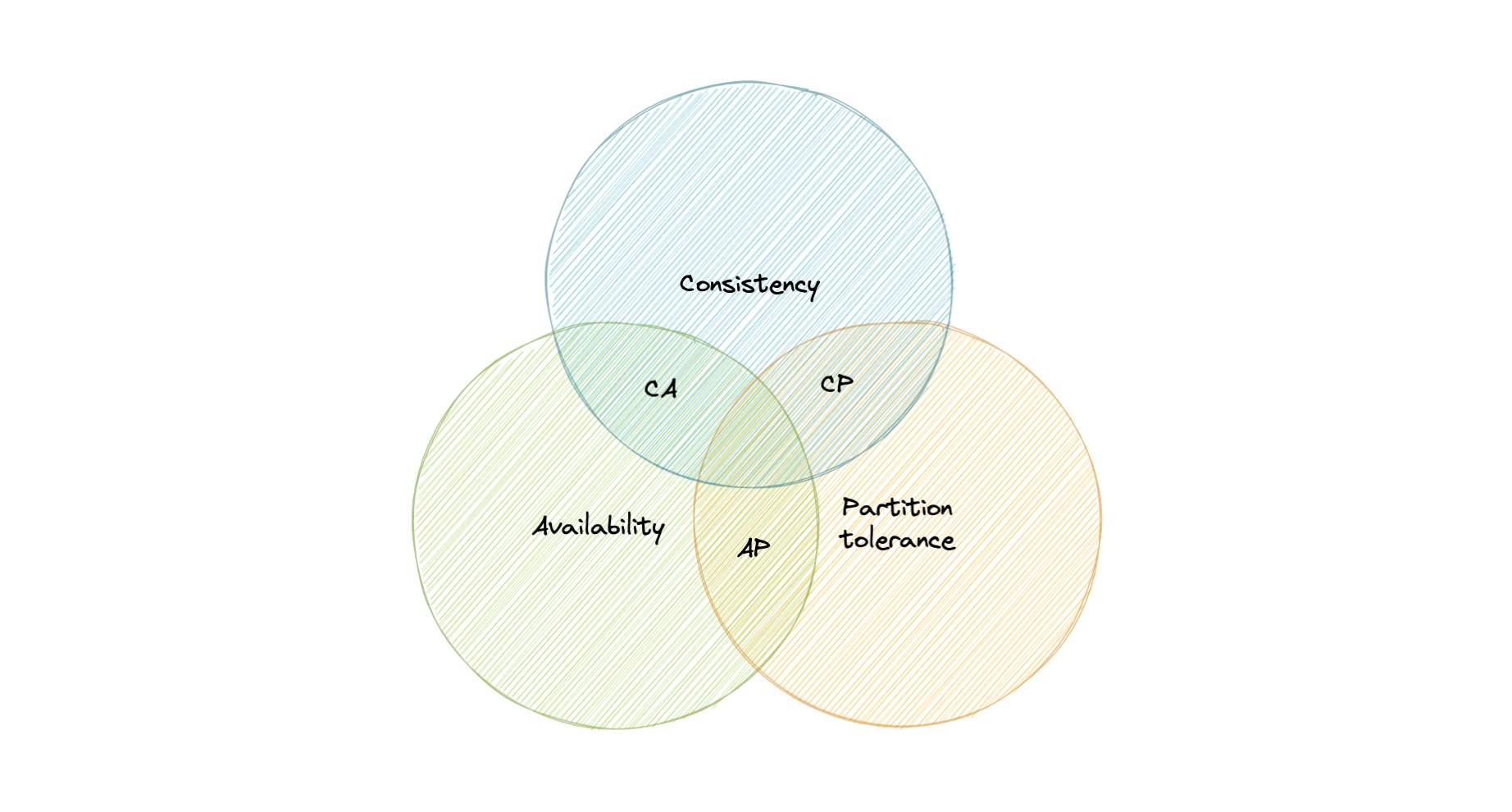
- consistency: all clients see same data at the same time, no matter which server is connected
- availability: able to get data when one or more servers (not all) are down
- partition tolerance: the system continues to operate despite network partition (some of network’s components are disconnected) -> network is not reliable, have to support network partitioning -> select between
- CP: consistency & partition tolerance
- waiting for a response from partitioned node may cause timeout error -> business requires atomic read/write
- AP: availability & partition tolerance
- return most reliable data (might not be latest). write operations may need time to propagate when the partition is resolved -> business requires eventual consistency or have to continue working despite errors
- consistency patterns
- sync multiple copies of data to make clients have a consistent view of data
- weak consistency
- after a write, read operations may/maynot see it, works well in real-time use cases
- seen in systems such as memcached
- eventual consistency
- after a write, all read operations will eventually see it -> data is replicated asynchronously, works well on high availability systems
- seen in systems such as mail, …
- strong consistency
- after a write, all read operations will see it -> data is replicated synchronously
- seen in systems such as file systems and RDBMs (systems require transaction)
- availability patterns
- failover
- active-active
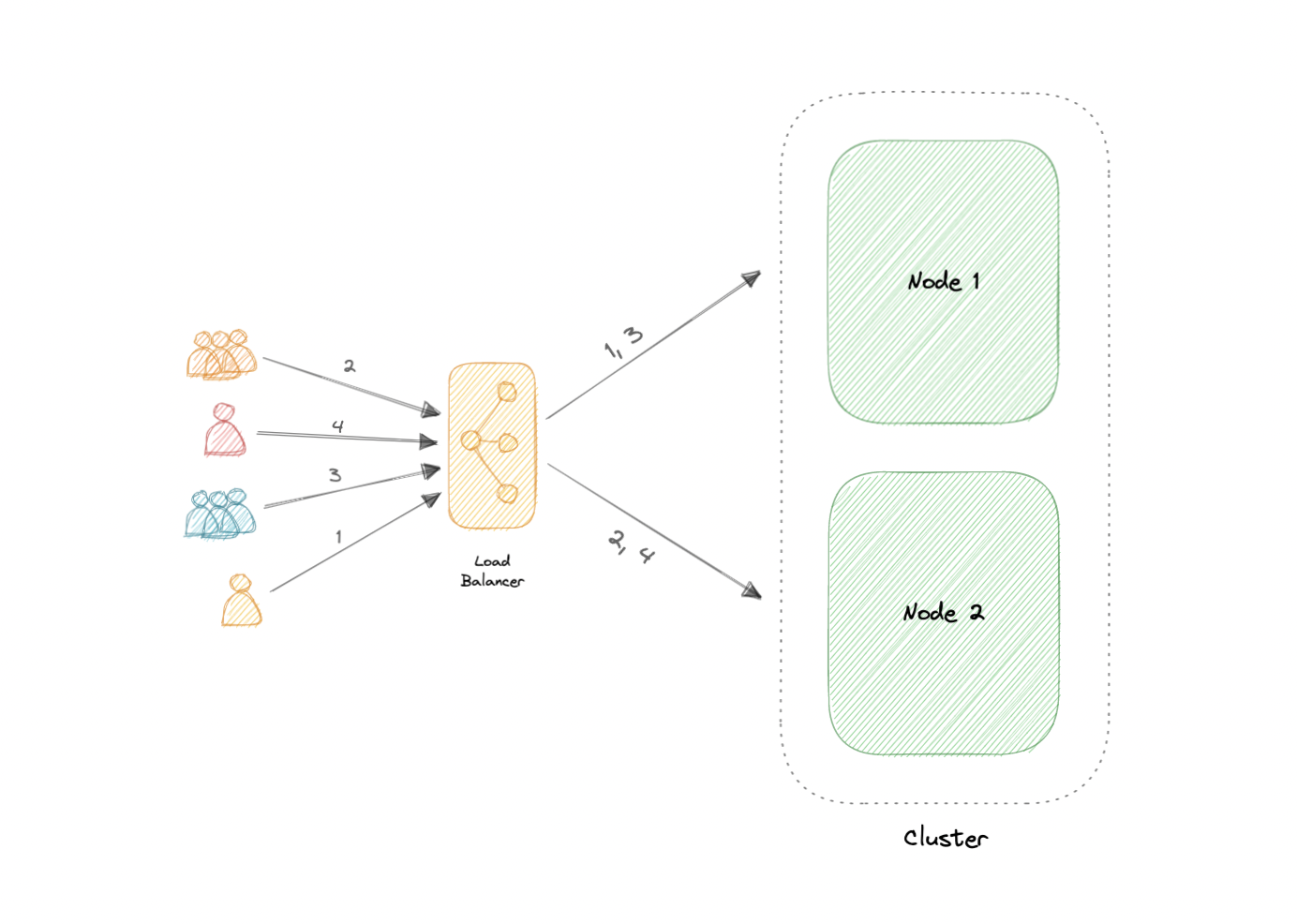
- multiple instances of application are running and serving clients’ requests simultaneously -> provide high availability and scalability, allow system to distribute workload to all servers
- provides redundant resources and failover capability -> the system continues working even if one or more servers are down
- active-passive (for failover)
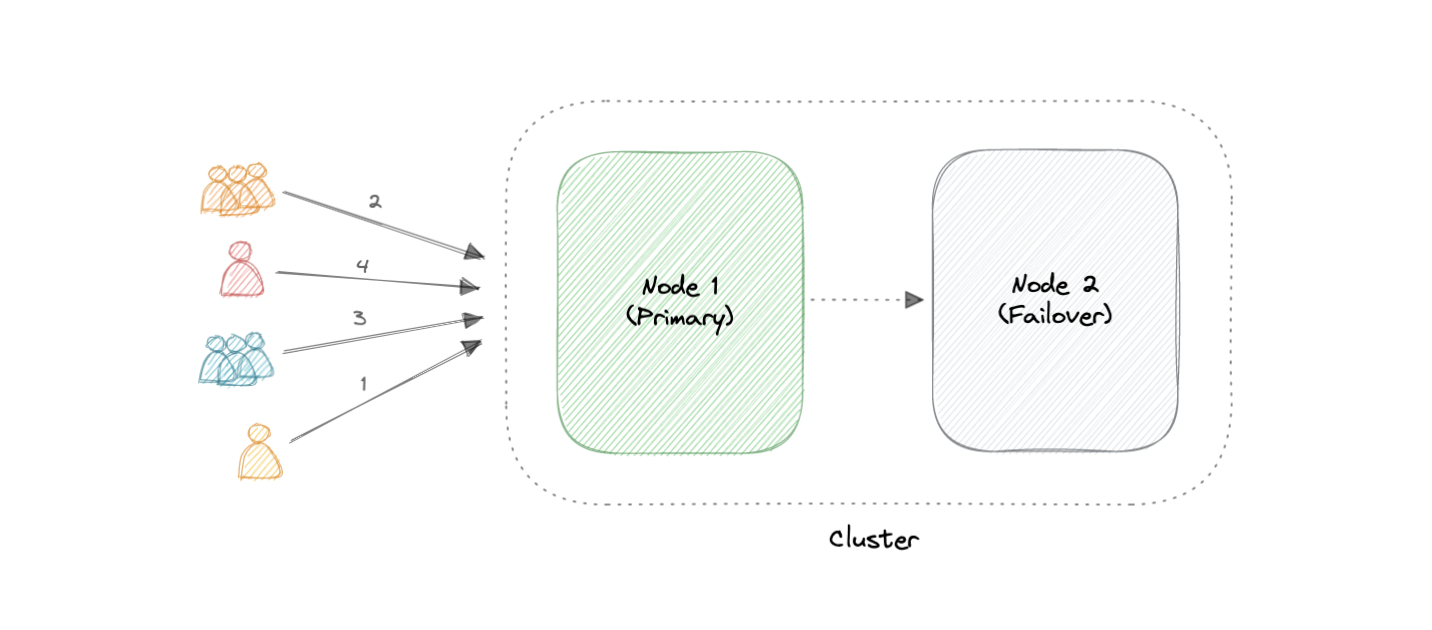
- one instance of application is running (active) and other instances are idle (passive) -> provide failover capability and efficient resource utilization (but high latency during failover)
- simplicity and cost-effective
- active-active
- replication
- failover
- metrics for monitoring
- SLA - service level agreement
- agreement between services and their users, eg. service availability, …
- SLO - service level objective
- about specific metrics
- SLI - service level indicator
- determine whether SLO metric is met or not
- SLA - service level agreement
- CAP theorem
-
domain name system (DNS)
- hierarchical system, with some authoritative servers -> ip lookup
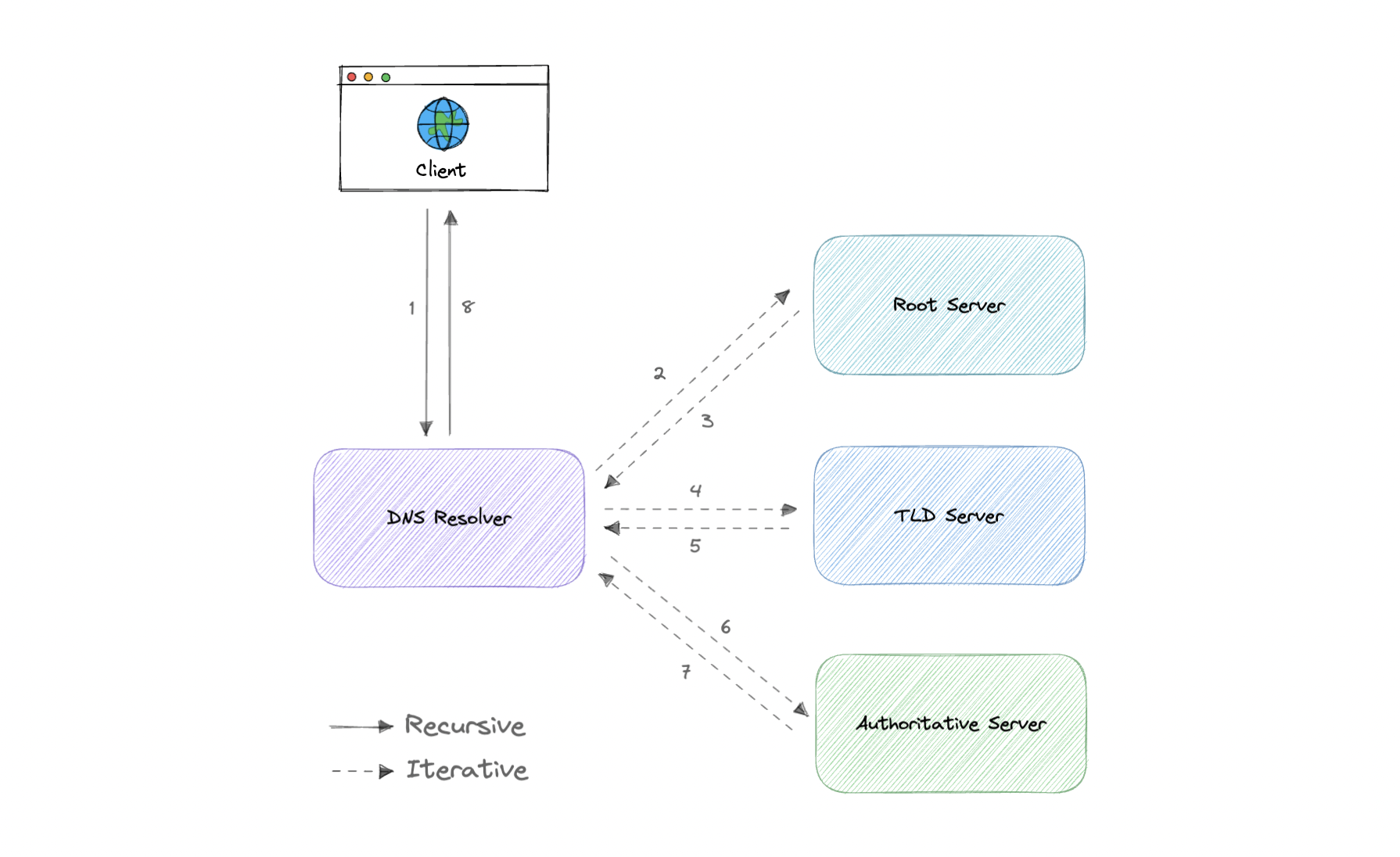
- DNS resolver
- middleman between client and DNS nameserver
- Root server
- redirect request to TLD server based on extension of domain (.net, .org, …)
- Top-level domain (TLD) server
- authoritative server
- DNS record types
- address record: domain -> ip address
- A: IPv4
- AAAA: IPv6
- canonical name record (cname): domain -> domain (not ip address)
- name server (NS): name server of DNS
- address record: domain -> ip address
-
content delivery network (CDN)
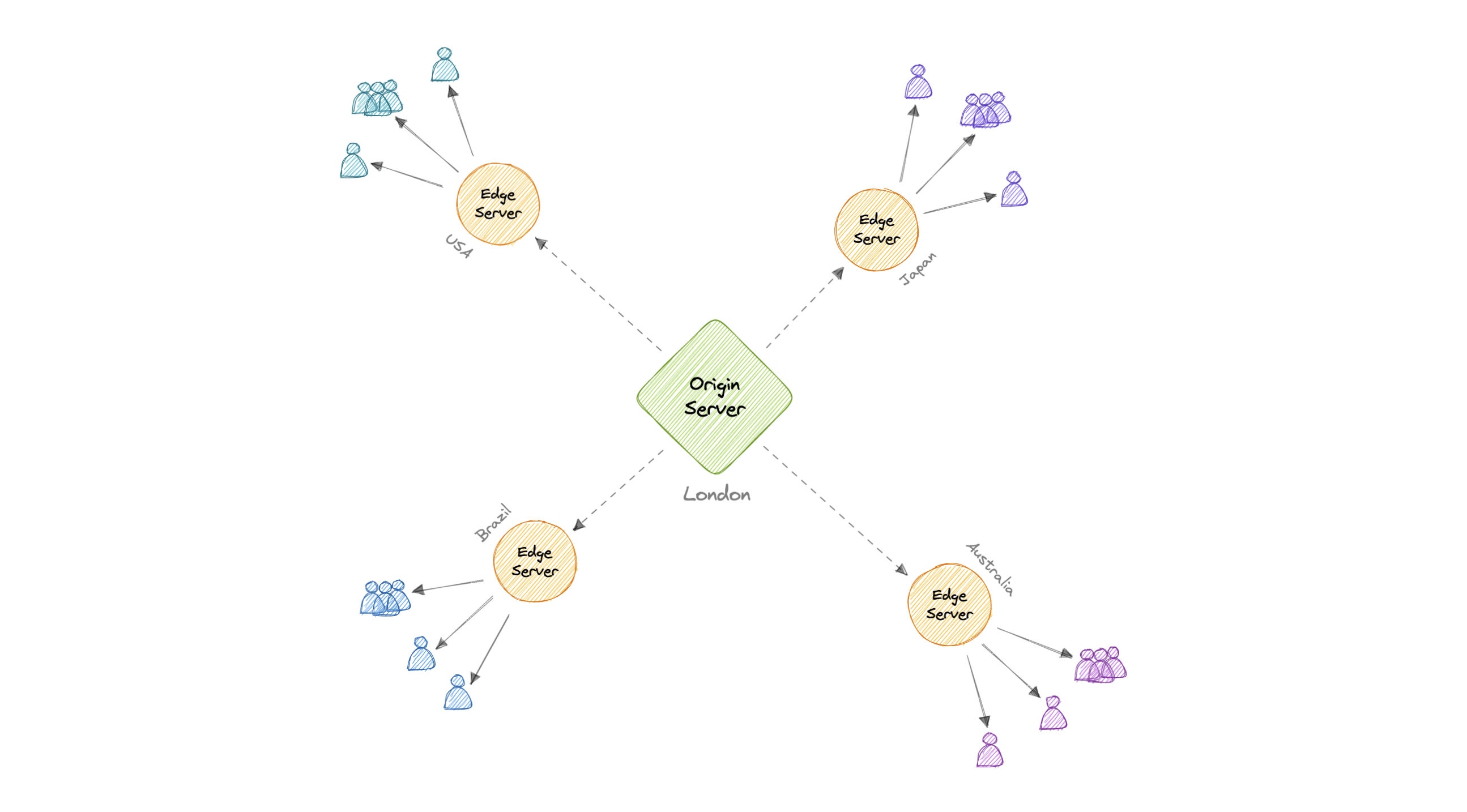
- increase data availability and reduce network costs
- global distributed network of proxy servers -> serving contents from locations closer to user for static or multimedia files
- 2 types
- push cdn: receive new content when changes are made on server -> full responsibility for providing content, upload and rewrite url
- pull cdn: grab new content when the first user requests them -> may delay request, create redundant traffic
-
load balancer & proxy
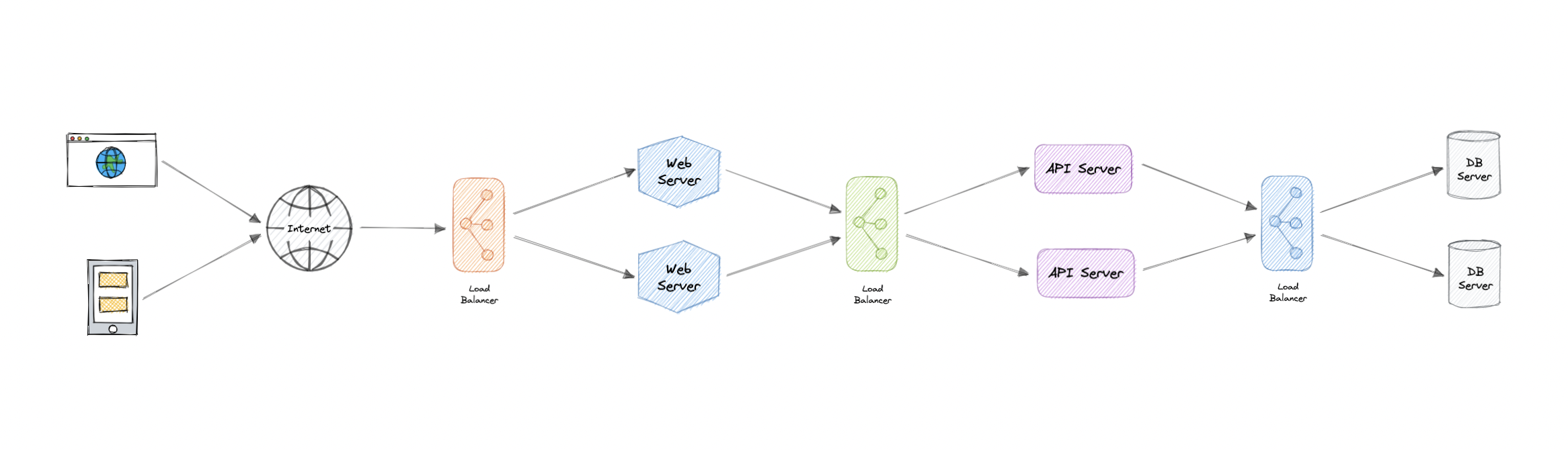
- distribute incoming requests to computing resources, and return responses to clients
- prevent requests coming to unhealthy resources, overloading resources, ssl termination and keep session persistence (session affinity)
- support horizontal scaling (usually managed by cloud provider)
- load balancer can be a bottleneck in system if it’s not well designed
- 2 types of load balancer
- L4 (network load balancer): based on networking information (eg. headers, ip address, …) -> for UDP/TCP/… -> for gateway
- L7 (application load balancer): content-based routing (read full request’s info) -> for HTTP/HTTPs, support SSL natively -> for business services
- some routing algos
- round-robin
- weighted round-robin
- least connections
- least response time
- least bandwidth
- hashing
- reverse proxy is internal service to provide unified interface to public (hide servers from client) -> increase complexity of system
- load balancer is more efficient than reverse proxy if having multiple servers
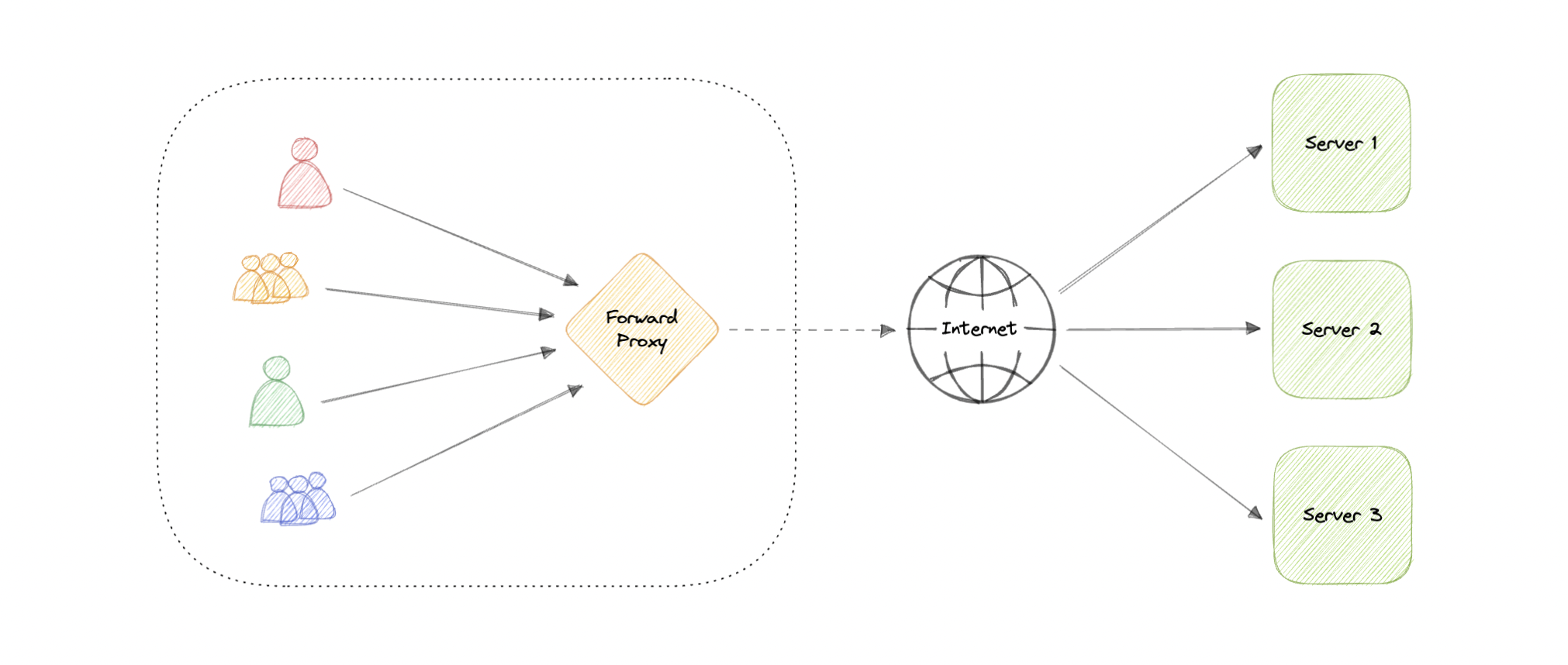
- forward proxy
- middleman between client and internet: client >> forward proxy -> internet
- reverse proxy
- middleman between server and internet: internet -> reverse proxy >> servers
- reverse proxy can act as load balancer
-
database
- relational database (RDBMs)
- collection of data items organized in tables -> schema on write
- ACID: set of properties of RDBMs
- atomic: a transaction’s operations must be executed all or nothing
- consistency: a transaction brings system from consistent state to another consistent state
- isolation: each transaction is executed independently from other transactions
- durability: each transaction is executed, and then stored
- scaling
- replication
- master (read+write) - slaves (read only), if master is down, one of slaves is promoted as next master, and new slave is created
- master - master
- need load balancing, or logic to select server to write (system uses consistent hashing?)
- may violate ACID properties
- have to solve conflicts
- federation - functional partitioning
- not effective if schema/logic requires many functions, table joining
- hardware complexity
- sharding
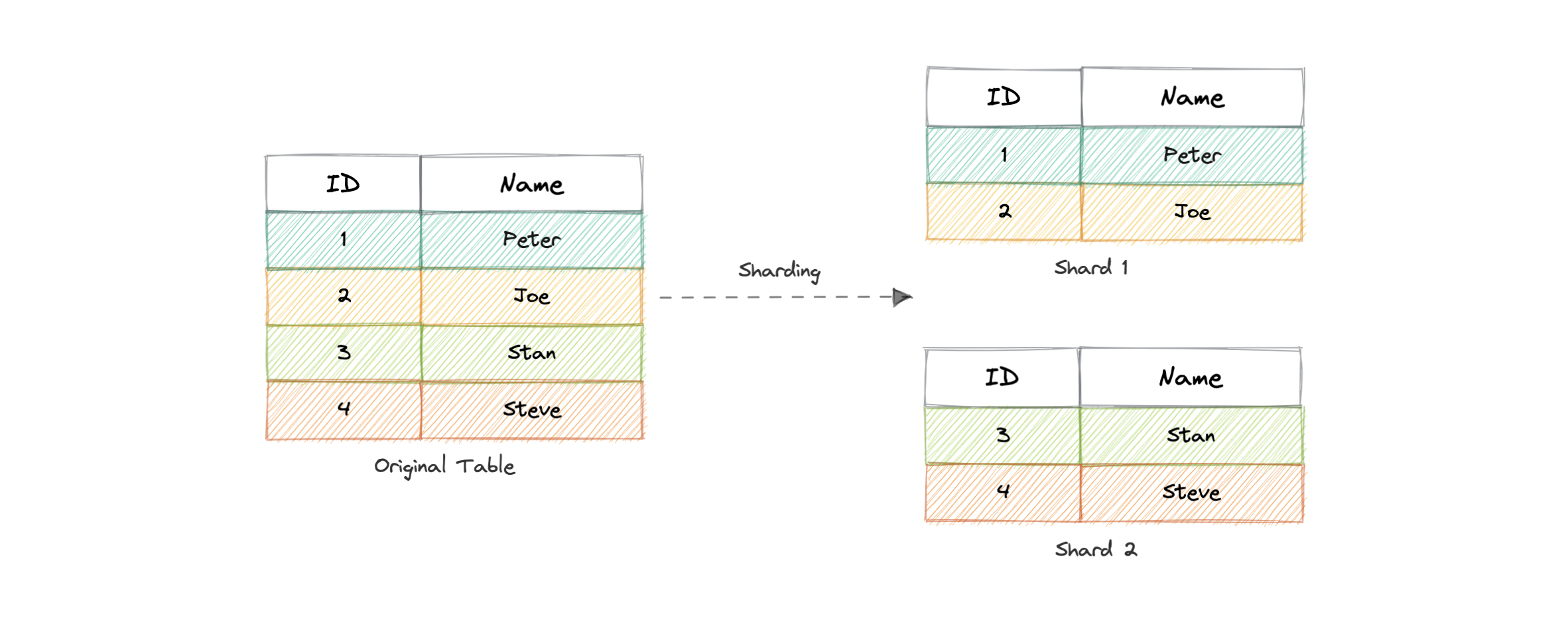
- distribute data across databases (manage a subset of data) -> less read/write traffic, replication, …
- system is availability (continue working if some shards are down)
- parallel writing operations
- add more complexity to logic, table joining
- need to rebalance data (resharding)
- replication
- denormalization
- keep redundant data to reduce expensive joins
- data is duplicated, worse performance for heavy write operations
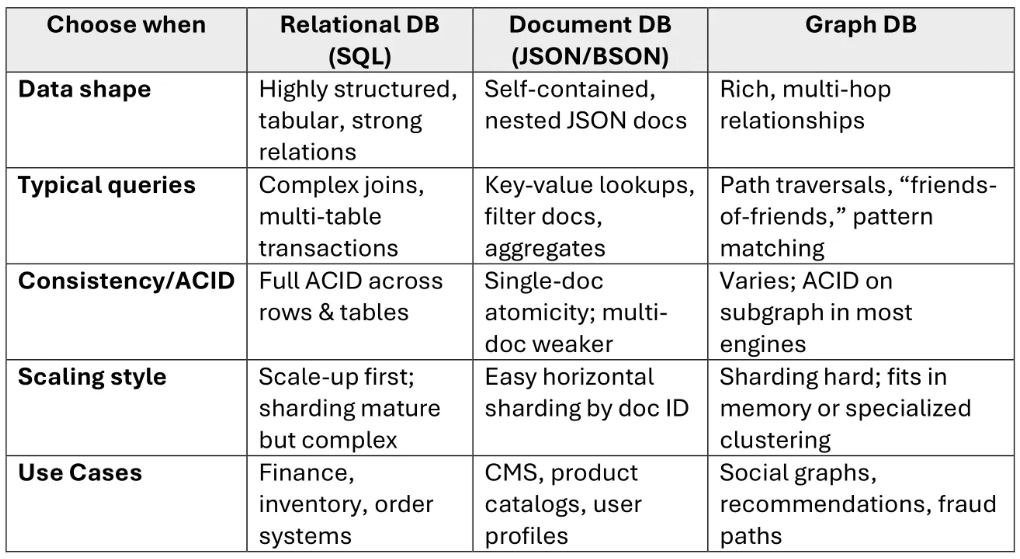
- nosql
- data is represented in key-value, document, wide column, or graph
- data is duplicated
- violate ACID properties
- eventual consistency: reach consistent state after a period of time
- easy horizontal scaling/sharding?
- key-value
- read/write operations in O(1), backed by memory or SSD
- high performance, mostly use for temporal data and caching
- document
- data is store in document format (XML, json, …)
- documents are organized by collections, tags, …
- document databases offer schema flexibility and load entire documents efficiently -> eliminate join overhead and be more performant
- wide-column
- graph
- each node stores a record of data, and each arc stores the relationship between nodes
- optimized for representing complex relationships
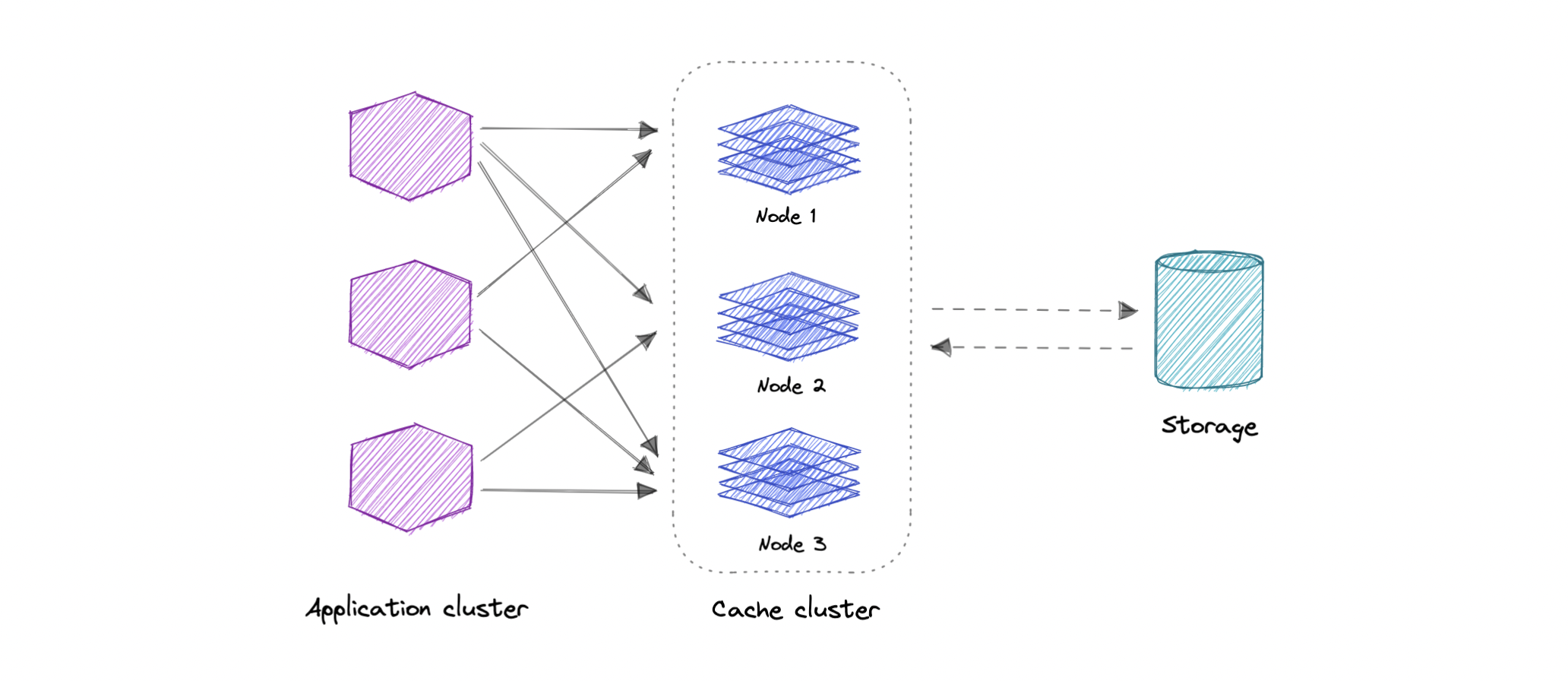
- cache
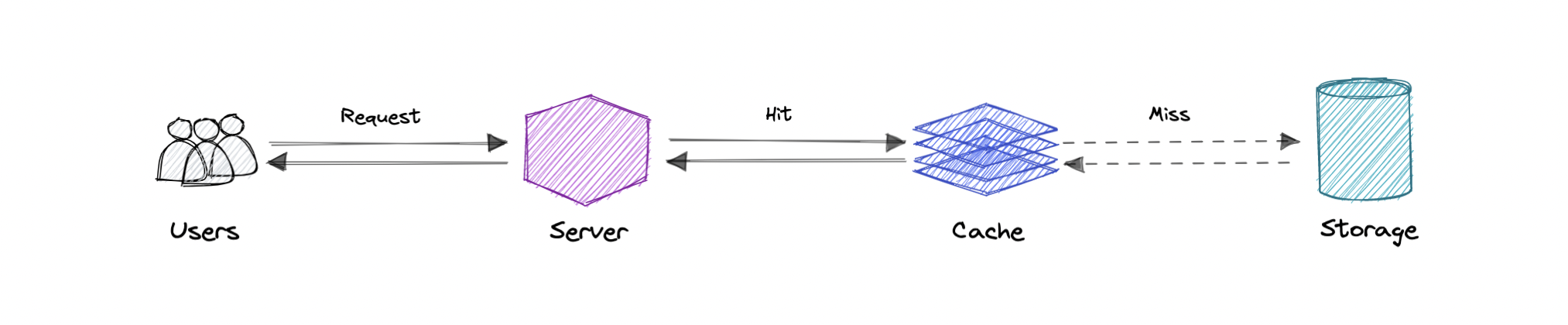
- reduce the load and improve the performance in servers and databases
- many types of caching
- client
- CDN
- web server, reverse proxies
- database
- application (memory caching)
- when to update cache/cache validation caching
- cache invalidation
- write-through
- write-around
- write-back
- eviction policies
- FIFO
- LIFO
- LRU
- LFU
- MRU
- RR - random replacement
- distributed cache
- how to scale database?
- partitioning
- horizontal partitioning (sharding)
- split tables by row, each partition has same schema but with different rows
- suitable for multi-tenant applications
- kinds of horizontal partitioning
- key-based
- use uniform distribution hash function on specific key in each record
- queries can span multiple shards
- range-based
- based on ranges of a particular key
- uneven distribution and hotspots data
- directory-based
- use lookup table to map keys to corresponding shards
- lookup table may become performance bottleneck
- geo-sharding
- based on geographic location
- customer-based sharding
- optimize performance and isolation for multi-tenant applications
- hard to utilize resources across shards
- key-based
- vertical partitioning
- split tables by columns -> optimize access times and cache efficiency
- horizontal partitioning (sharding)
- scaling
- vertical scaling
- add more CPU and memory to DB
- horizontal scaling
- create new read replicas of DB (master-slave), or add new node to leaderless DB
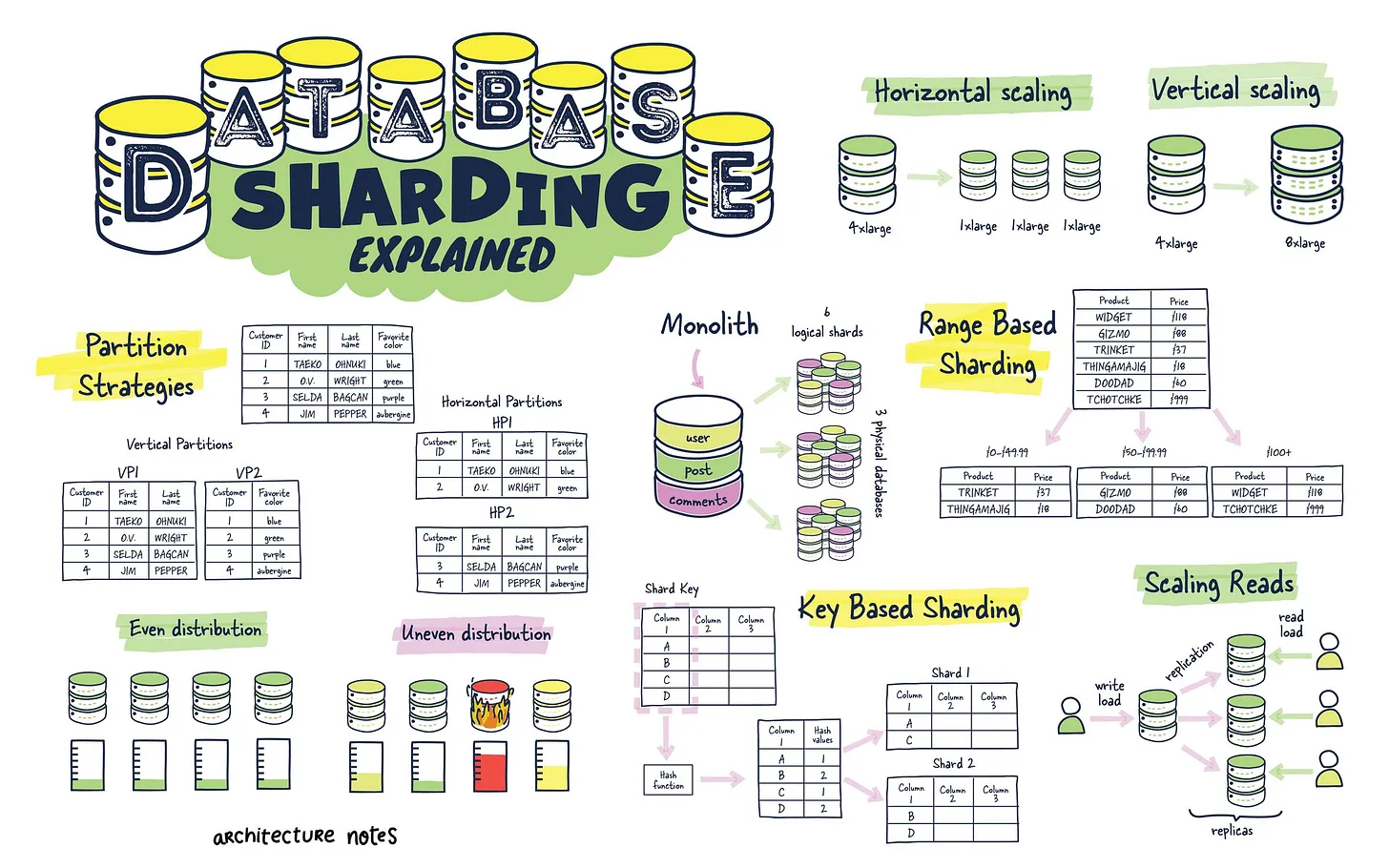
- create new read replicas of DB (master-slave), or add new node to leaderless DB
- vertical scaling
- partitioning
- relational database (RDBMs)
-
asynchronism - non-blocking system
- reduce request time for expensive operations, doing time-consuming works in advance, such as periodic aggregation of data
- message queue
- application publishes a job to queue, a worker receives, processes and sets job’s status to complete (in the background)
- task queue - a worker receives job and its data, and delivers its result
- support scheduling and run computationally-intensive jobs in the background
- message queue vs task queue? todo need to verify
- message queue is the low-level building block of the concept
- task queue is the implementation of message queue to achieve task orchestration - wrapper over message queue
-
networking
- OSI model
- application (L7)
- supports http, smtp protocols
- interacts with user’s data
- presentation
- translation, encryption/decryption, and compression
- session
- open/close connection between 2 devices
- transport (L4)
- support TCP, UDP protocols
- chunking/ reassembling data into packets
- network
- routing and transferring data in networks
- data link
- physical
- application (L7)
- TCP
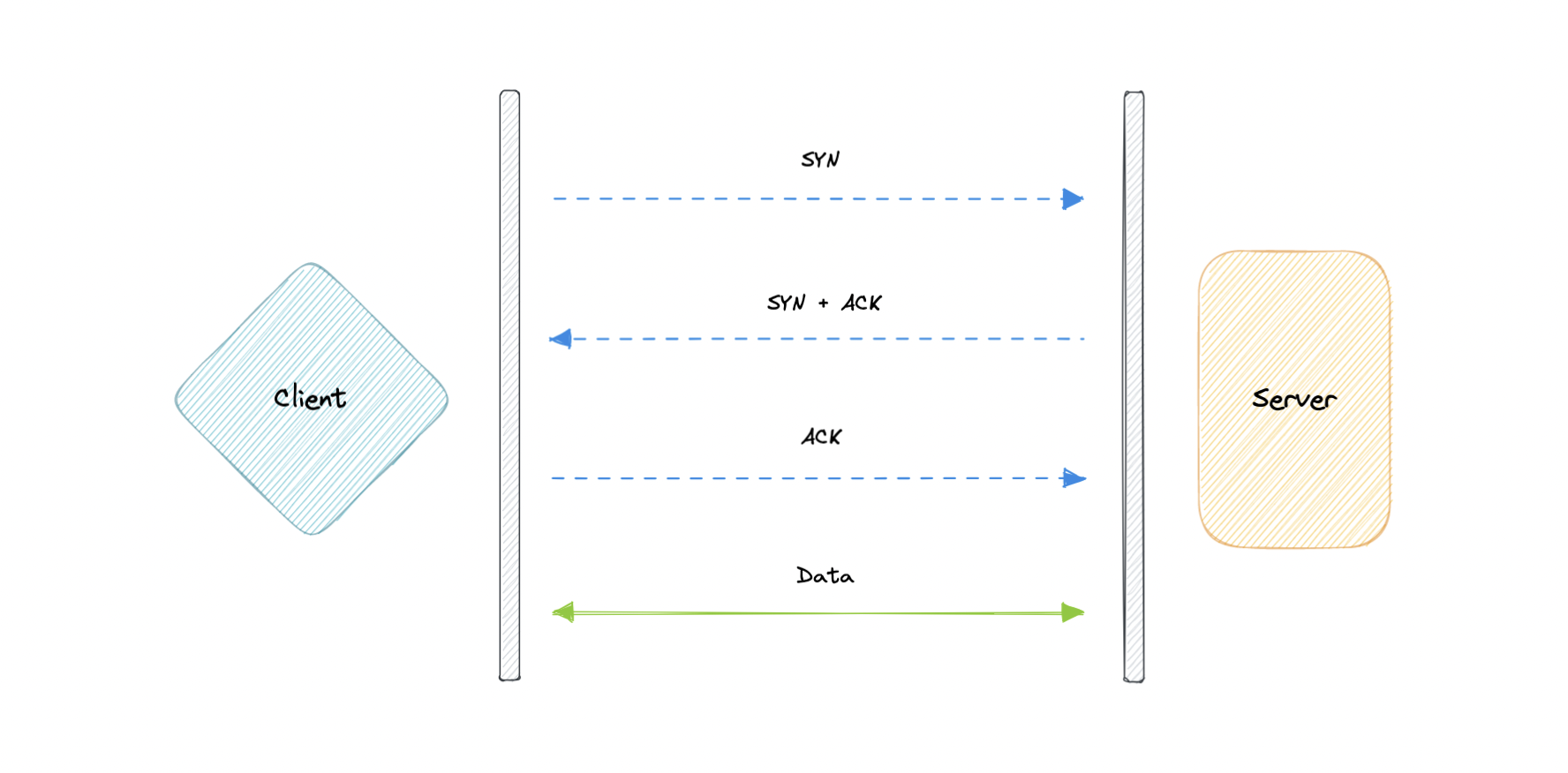
- is a connection-oriented protocol over IP network, established and terminated using handshake
- all packets sent are guaranteed to reach the destination in original order without corruption
- support congestion control
- UDP
- is a connectionless
- packets sent might reach to the destination out of order and not at all
- not support congestion control (prevent network overload and ensure smooth data flow -> manage traffic, similar to rate limiter?)
- less reliable but works well in real time use case
- HTTP
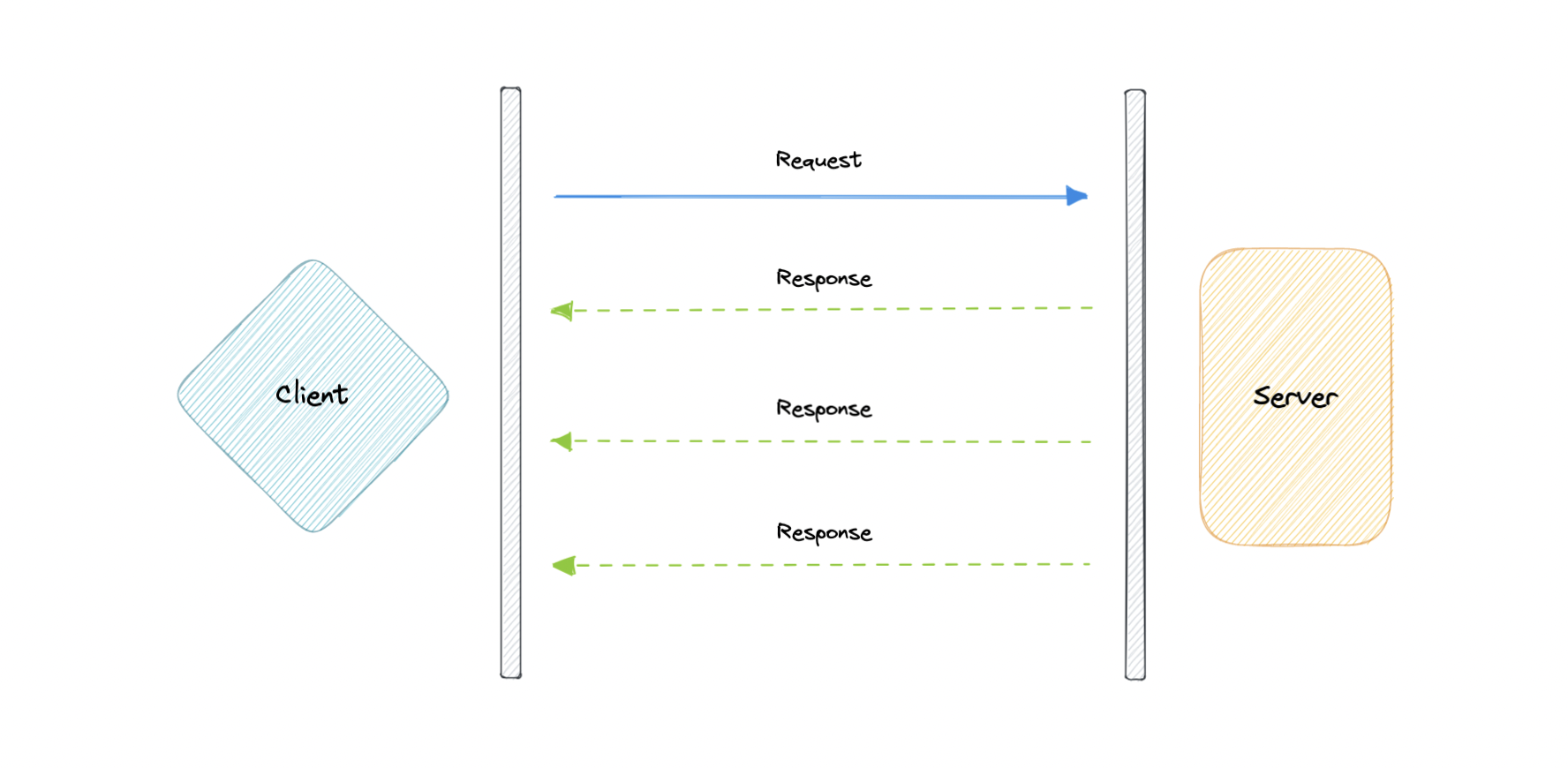
- is request/response protocol to encoding and transporting data between client and server
- self-contained -> flow through intermediate routers, and servers that perform load balancing, caching, encryption, …
- 5 verbs: GET, POST, PATCH, DELETE, PUT
- REST
- RPC
- OSI model
-
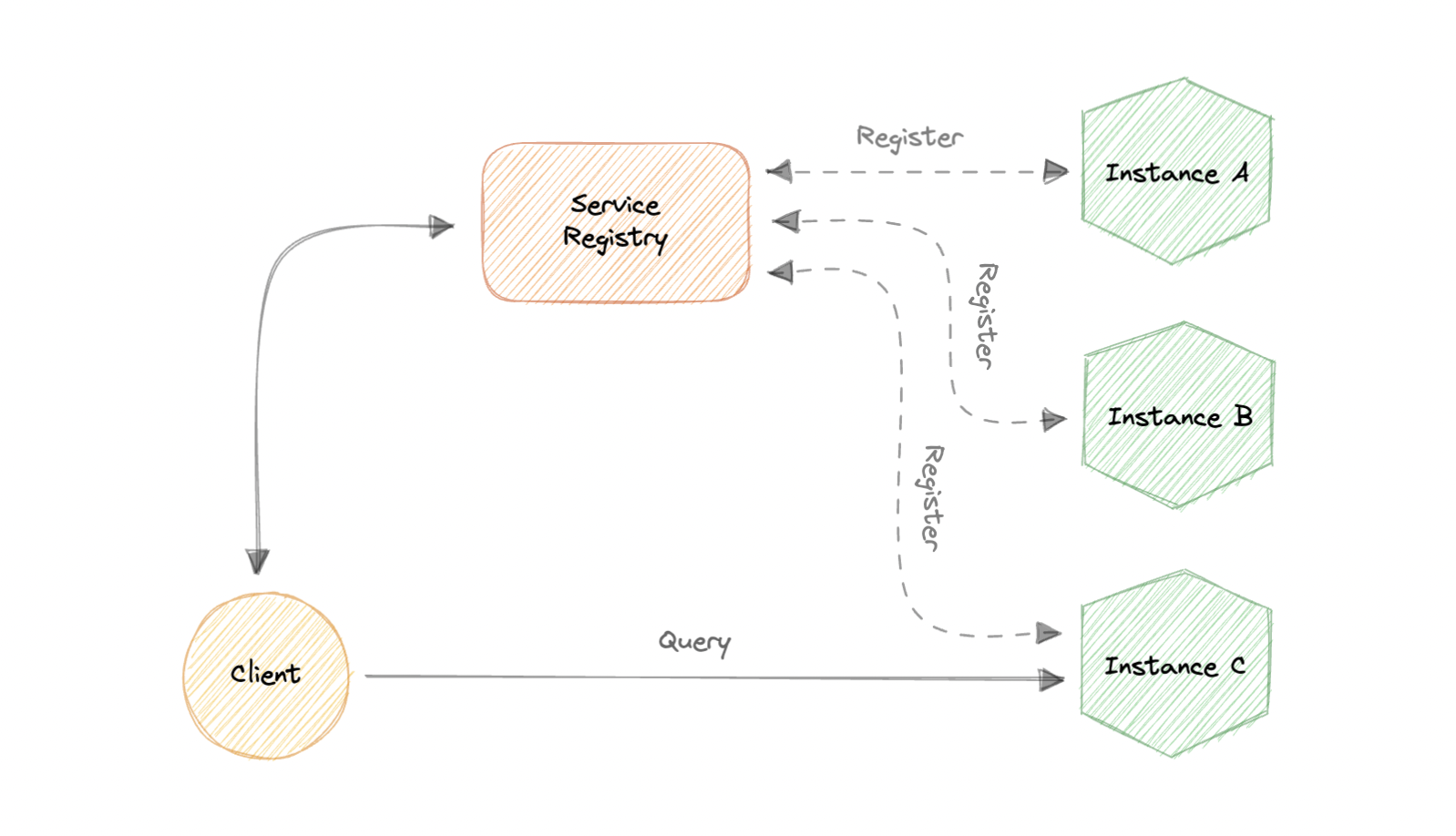
service discovery
- client-side
- server-side
- use intermediate components such that load balancer to distribute requests
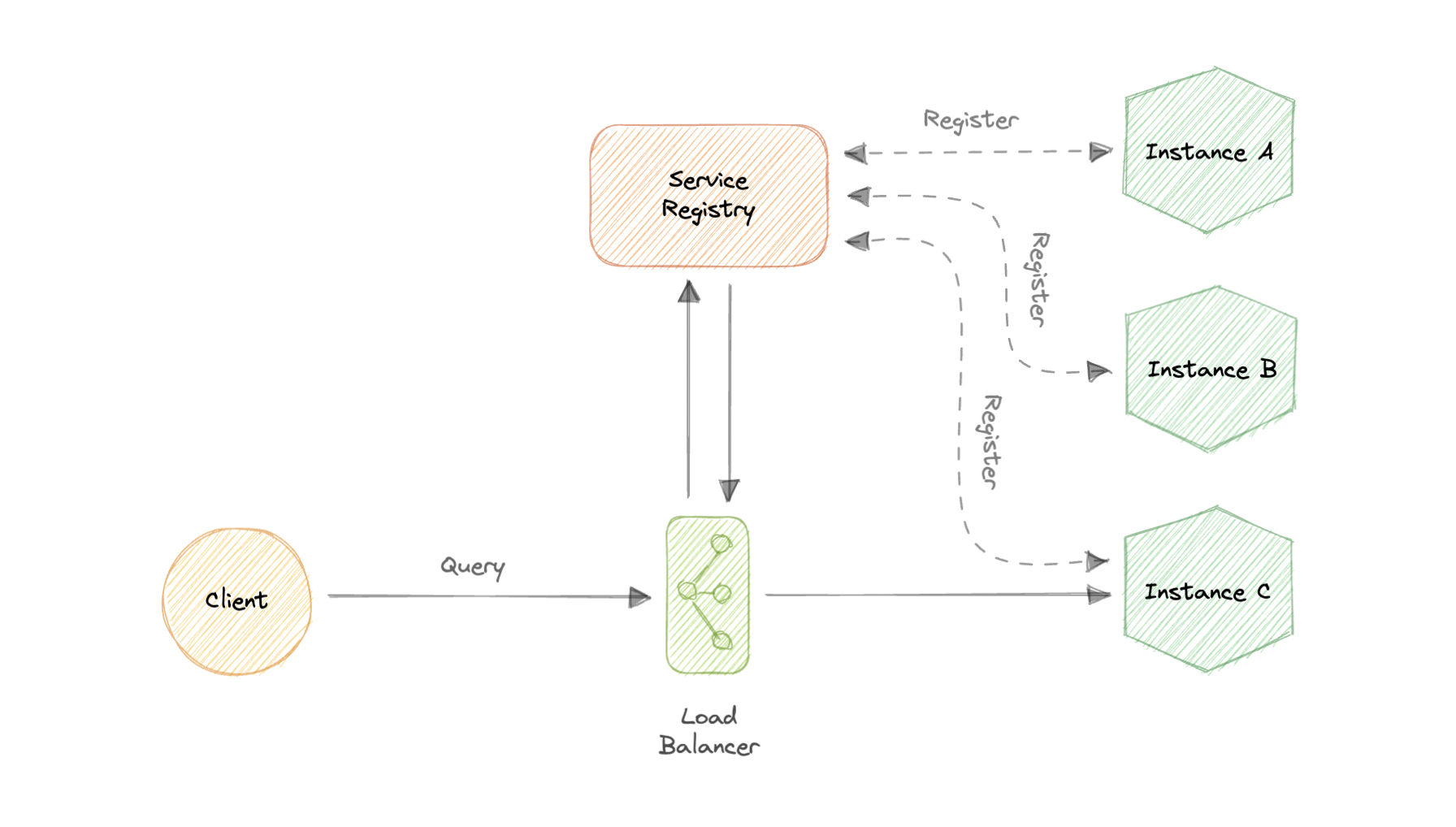
- client-side
-
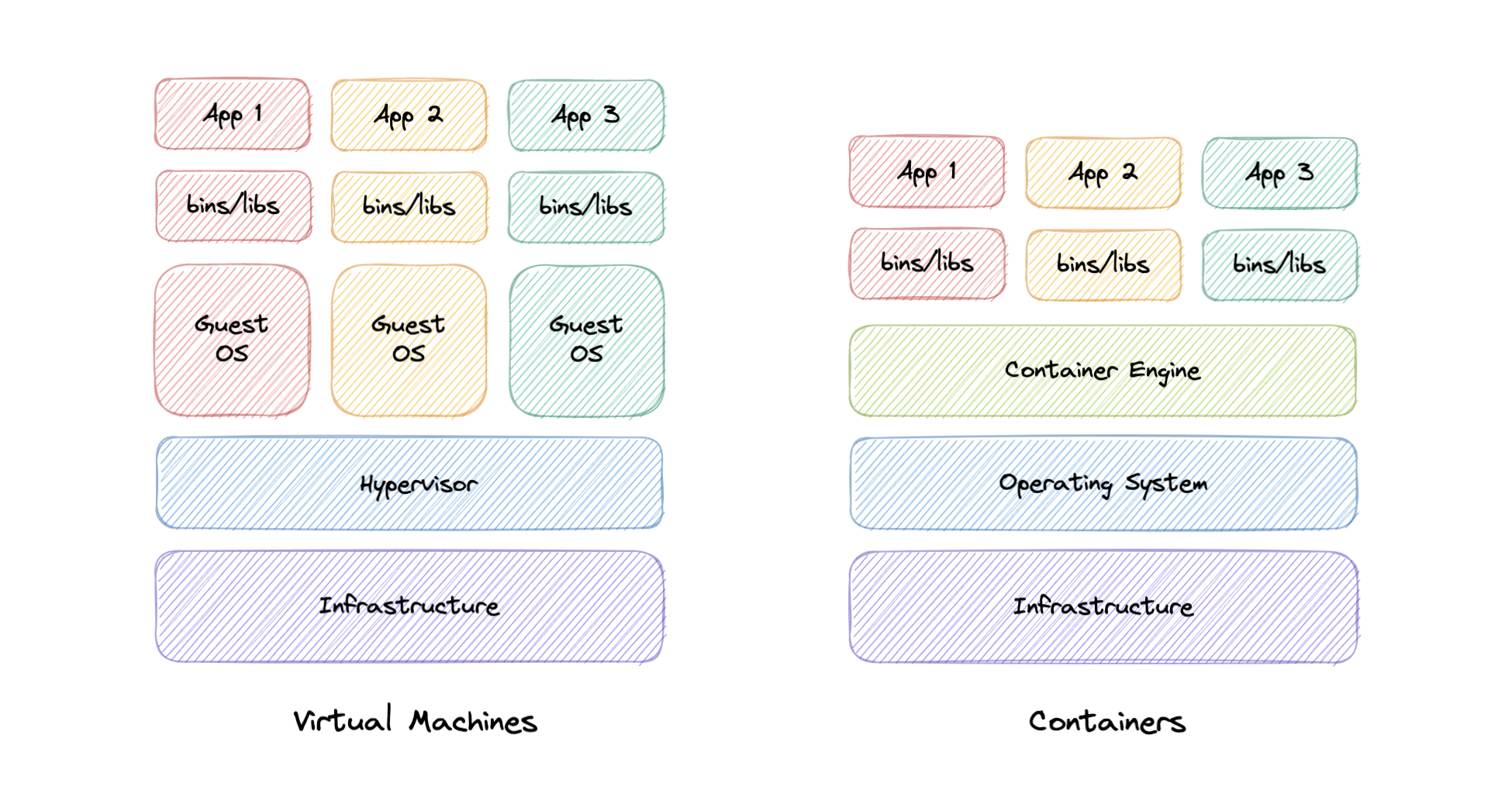
virtualization / containerization
-
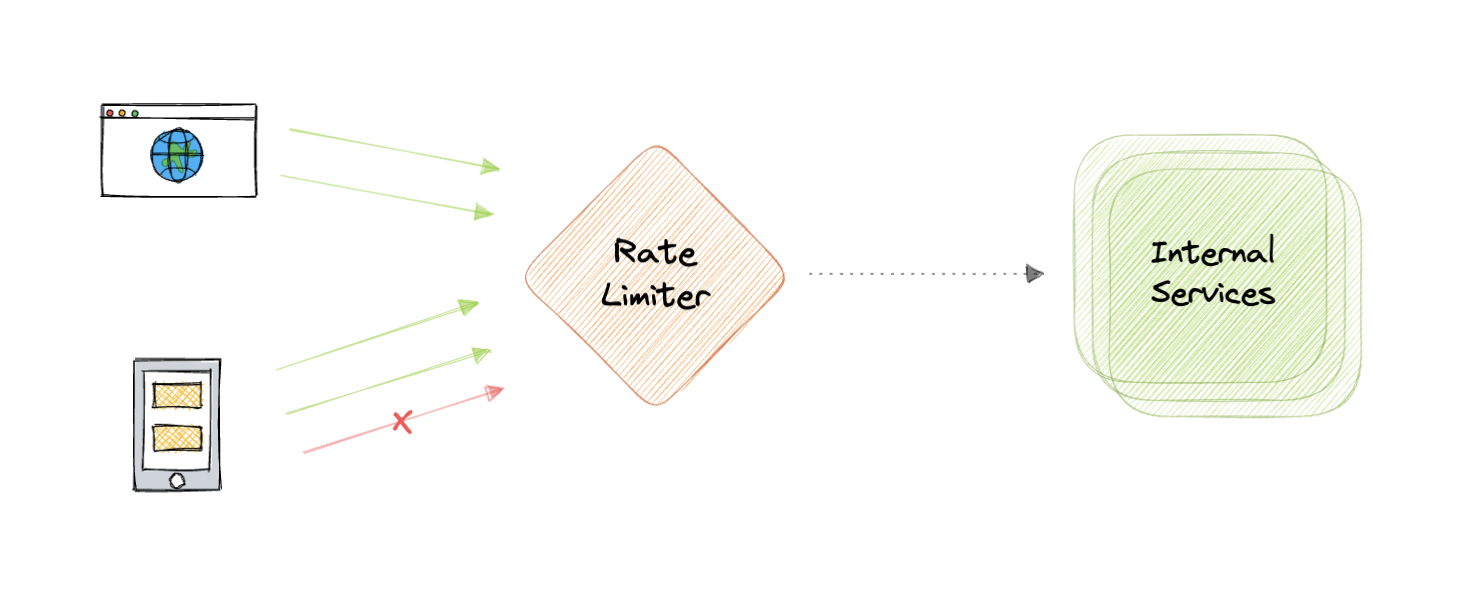
rate limiting
- prevent frequency of an operation from exceeding a defined limit
- algorithms
- leaky bucket
- token bucket
- fixed window
- sliding log
- sliding window
-
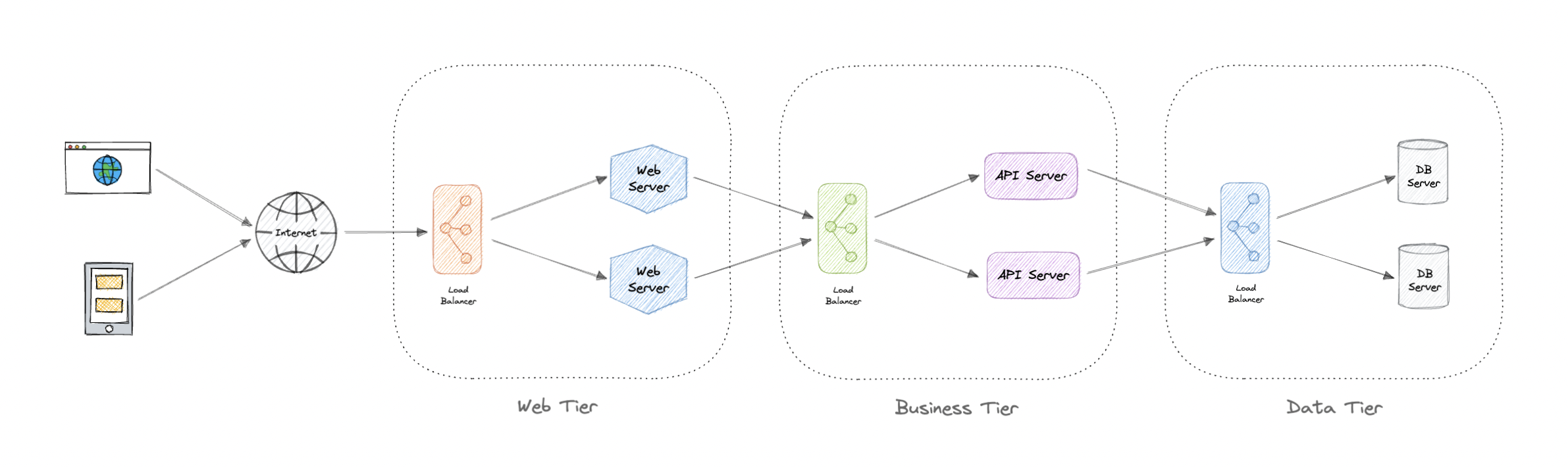
n-tier architecture
- layers are a way to separate responsibilities and dependencies, higher layers can use services from lower layers, not vice versa
-
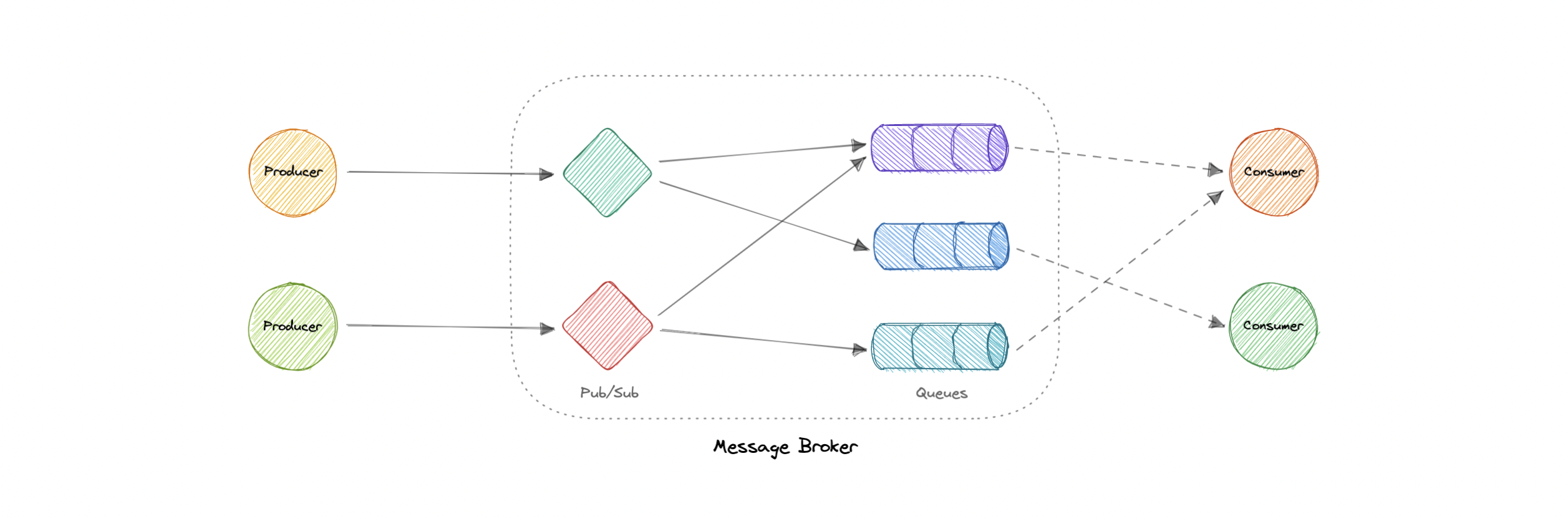
message broker - message queues - pub/sub
- brokers can store, route and deliver messages to consumers -> allow services can communicate with each other and exchange information, without connecting directly
-
monoliths - microservices
-
event-driven architecture (EDA) - event sourcing
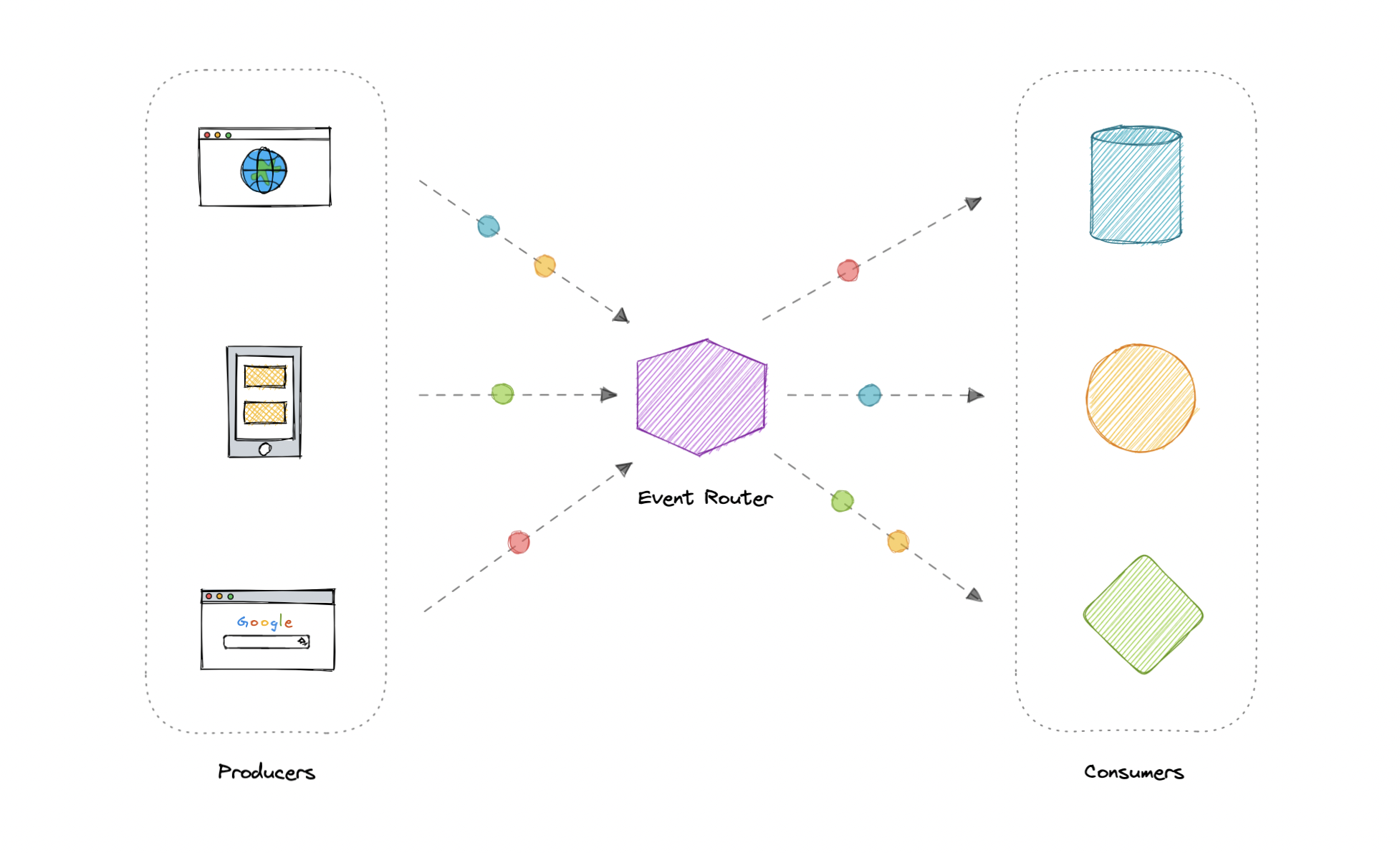
- use event as a way to communicate within a system
- components
- event producers
- event routers - brokers
- event consumers
-
event-driven patterns?
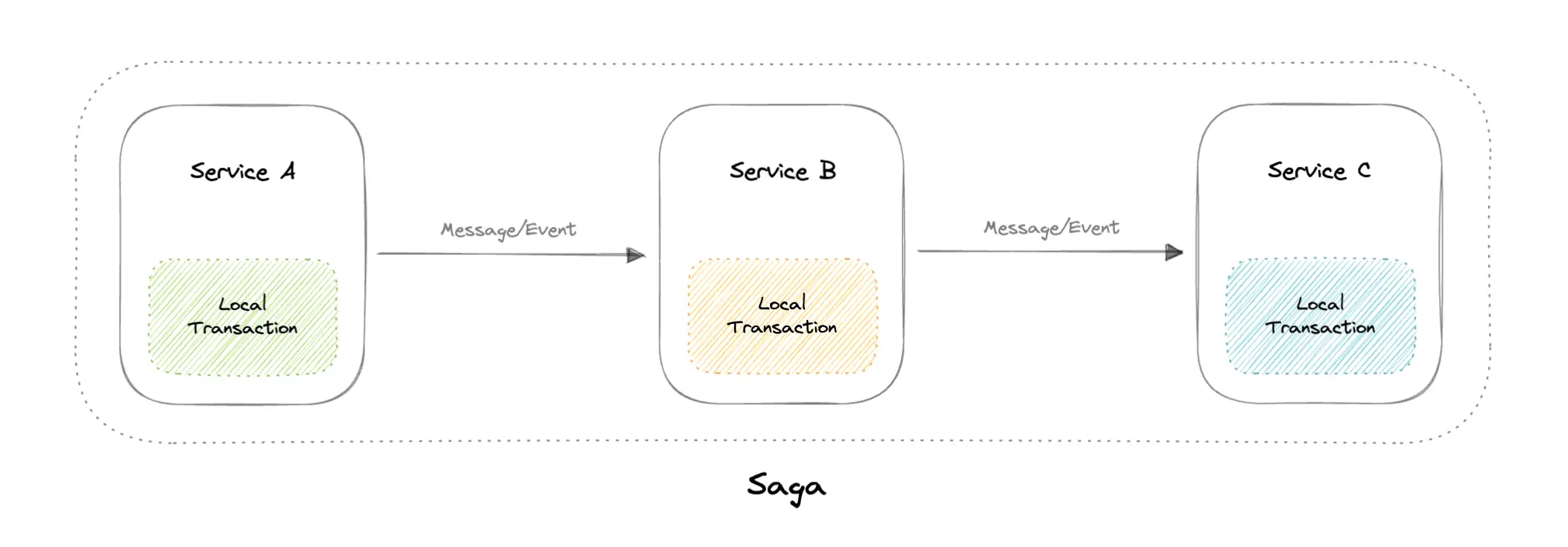
- saga
- a sequence of local transactions, each transaction updates database and publishes a message/event to trigger next transaction, if one transaction fails, preceding transactions will be reverted
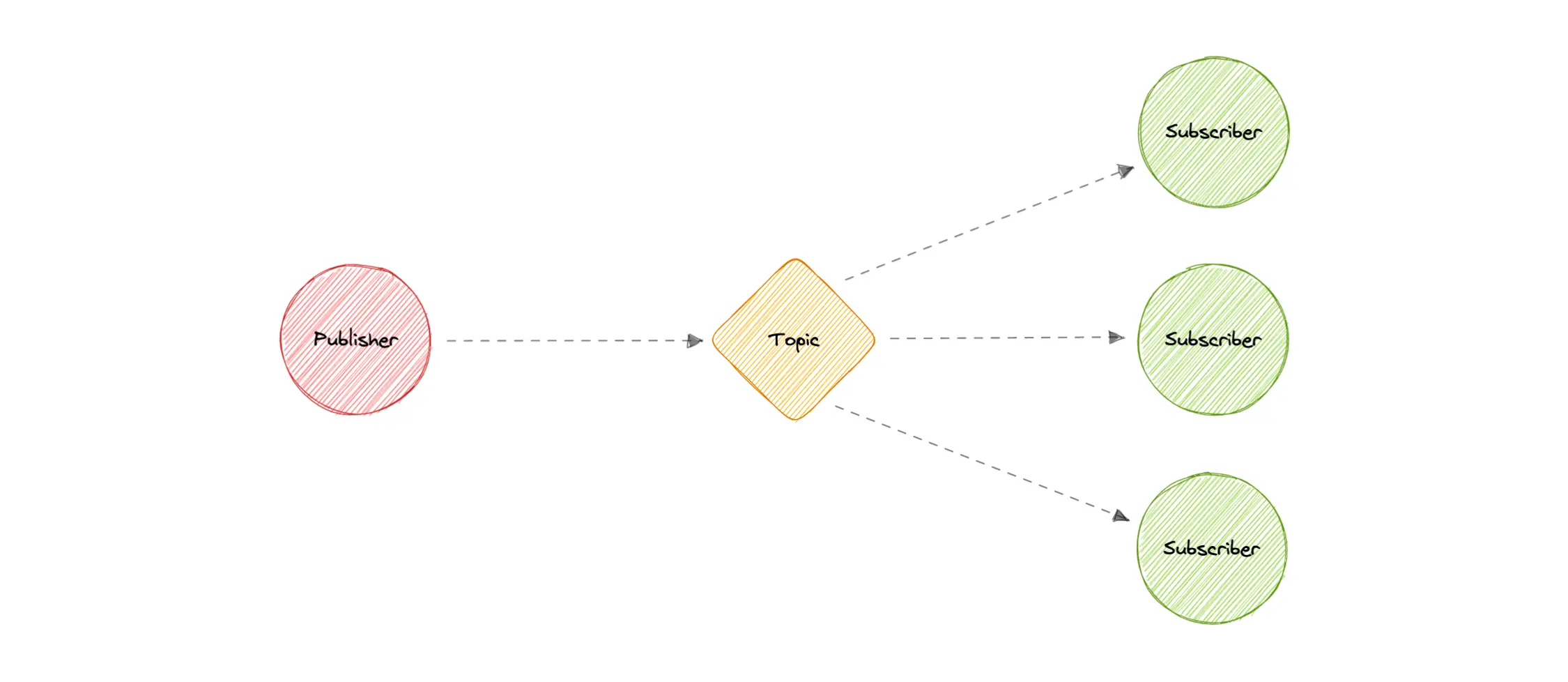
- pub/sub
- advantages
- eliminate polling, decoupled and independent scaling, …
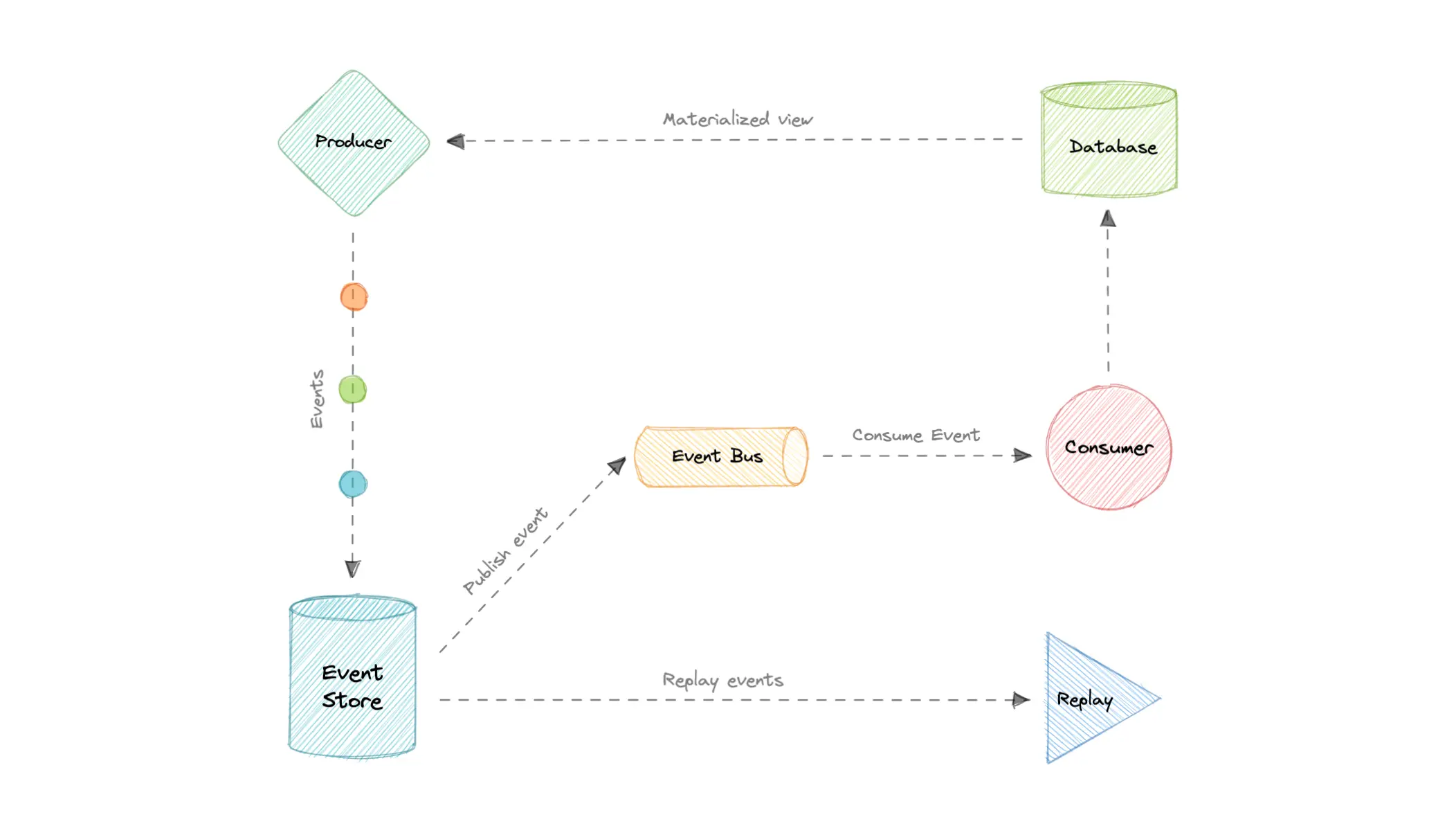
- event sourcing (not part of event-driven)
- use append-only store to record all actions taken on that data
- avoids synchronizing data model and business model, provides consistency for transactional data
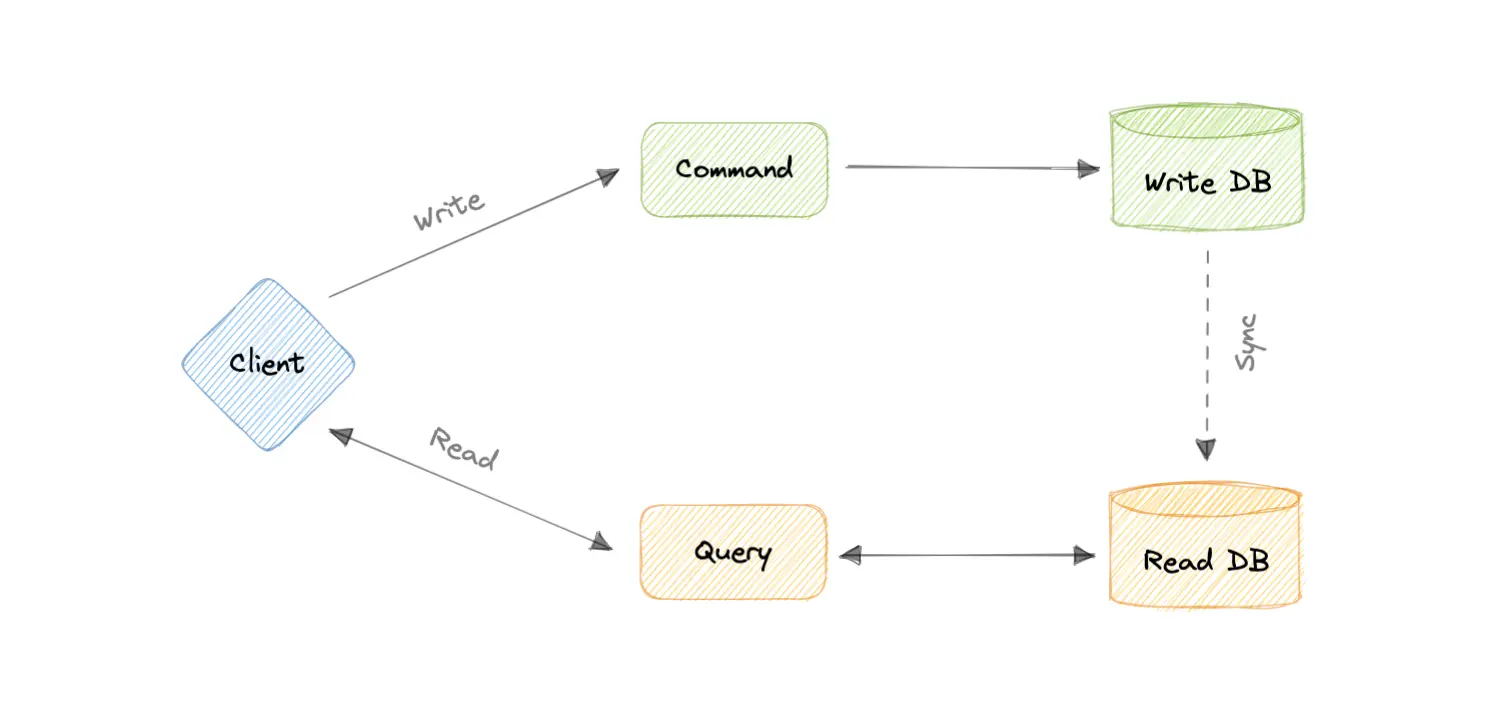
- command and query responsibility segregation (CQRS)
- divides system into 2 parts: query (read) and command (write)
- saga