cache stack
- browser cache
- CDN
- reserve proxy
- in-process cache
- distributed cache (redis, …)
- buffer pool (DB)
- page cache
- L1/L2/L3 CPU
cache expiration/eviction/invalidation
- expiration (TTL)
- eviction (memory pressure)
- invalidation (data mutation)
cache expiration
- lazy expiration (with active cycle: samples and releases expired keys)
- absolute expiration (expire-after-write): set EX
- sliding expiration (expire-after-access): EX is set after each read
- absolute point-in-time expiration (expired-at)
- jittered expiration
actualTTL = baseTTL + random(jitter) - dynamic/contextual expiration
cache invalidation
- dual-write problem
cache strategies
-
read strategies
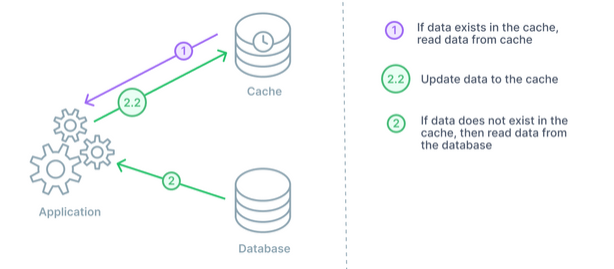
- read-aside
- the cache is separated from database -> the system can get data from database (if the cache crashes), and can store different data models (compared to database)
- the application gets missing data from database and writes to the the cache
- data in cache may be inconsistent
- read-through
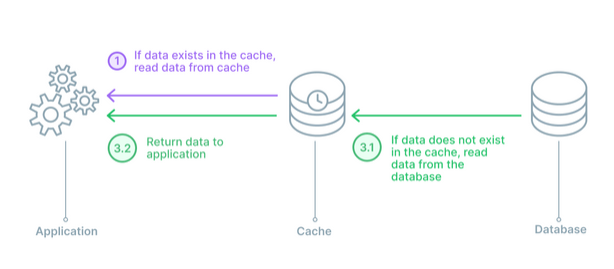
- the cache is between the application and the database, always requests data from the cache. for write operations, the application writes to the database directly
- the cache does operations to get missing data
- read-aside
-
write strategies
- write-through
- the application writes data to the cache first, and the cache writes to the database immediately
- increase write latency because the action must go to the cache and the database
- write-back
- similar to write-through strategy, but the cache writes to the database after a delay (not immediately)
- improve overall write performance, and reduce writes if batching is supported
- can lose data if the cache is down
- write-around
- the application invalidates data in the cache (asynchronously), writes data to the database first, and the data goes to the cache (read-aside)
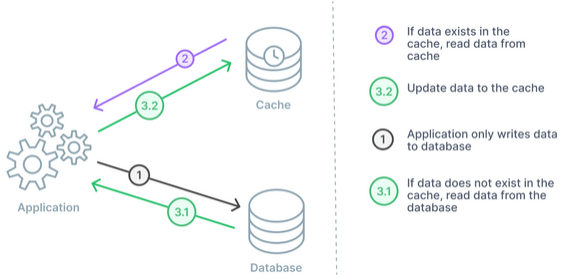
- the application invalidates data in the cache (asynchronously), writes data to the database first, and the data goes to the cache (read-aside)
- write-through
-
cache strategy comparison
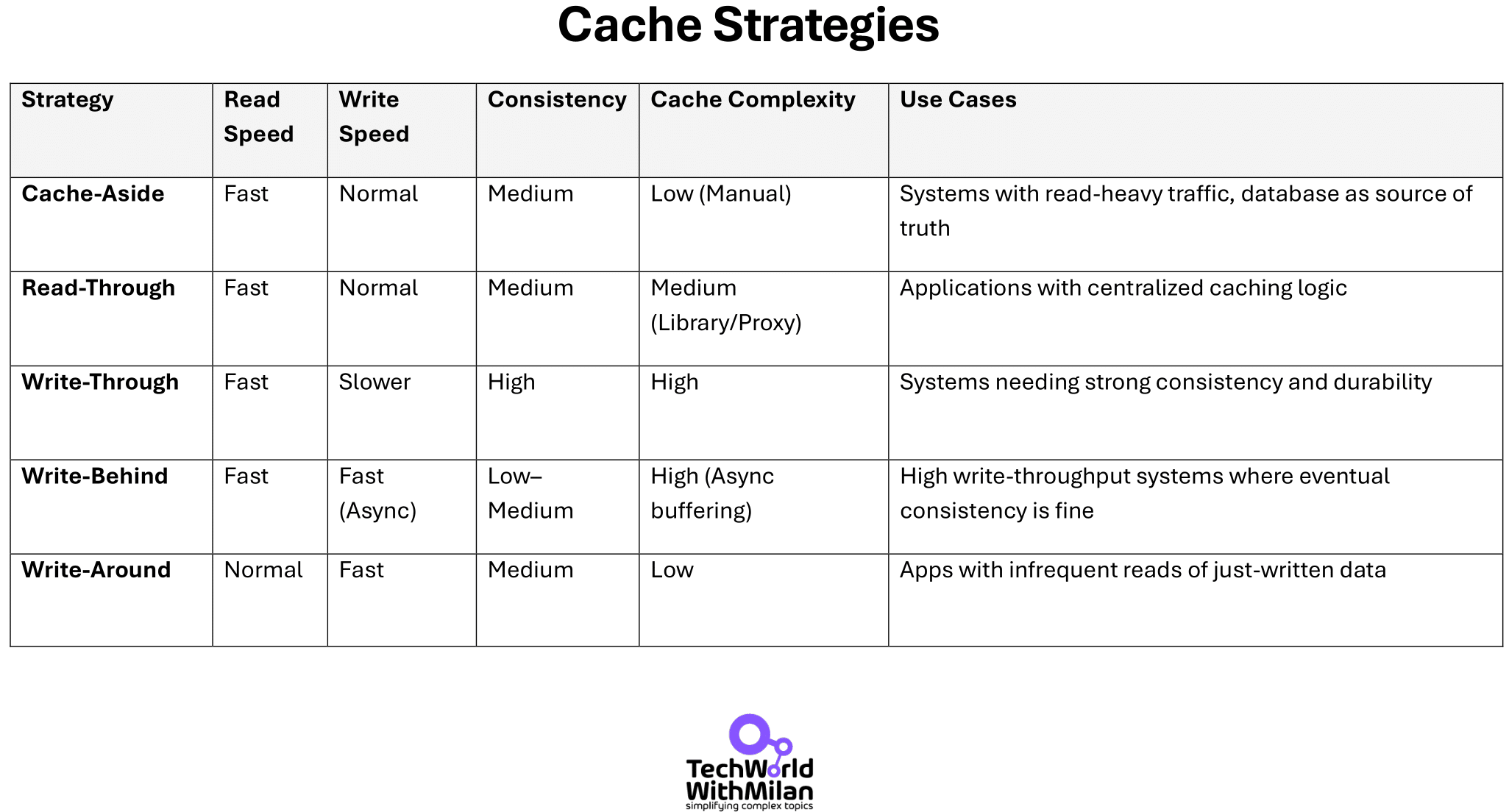
-
cache validation strategies
- time-based (expiration)
- command-based (triggered directly)
- event-based (triggered by event, may come from other services)
-
cache invalidation is hard?
- when should we invalidate cache (by time-to-live TTL)?
- race condition in concurrency
- data relationship?
- cache may be in anywhere (in distributed system)
-
resolve data inconsistency in write-around strategy
- cache-data-inconsistency
-> read aside + write around (delete cache after writing to database)
- write operations to cache are much faster than to database -> write around operations nearly unable to run between read - write back operations
- use ttl to expire data (even distribution)
- cache-data-inconsistency
-> read aside + write around (delete cache after writing to database)
caching problems
- thundering herd problem
- when cache expires, numerous requests are sent to backend simultaneously -> use cache expiration, lock/message queue to manage request flow
- cache breakdown
- during intense load, cache fails, and route all traffic to DB (bottleneck) -> cache expiration, layer caching mechanisms, rate limiting, …
- cache crash
- cache service crashes -> use cache cluster (backups + secondary failover cache), circuit breaker mechanism?
- cache penetration
- queries bypass cache and increase DB load -> use cache-aside pattern (check cache first then DB)
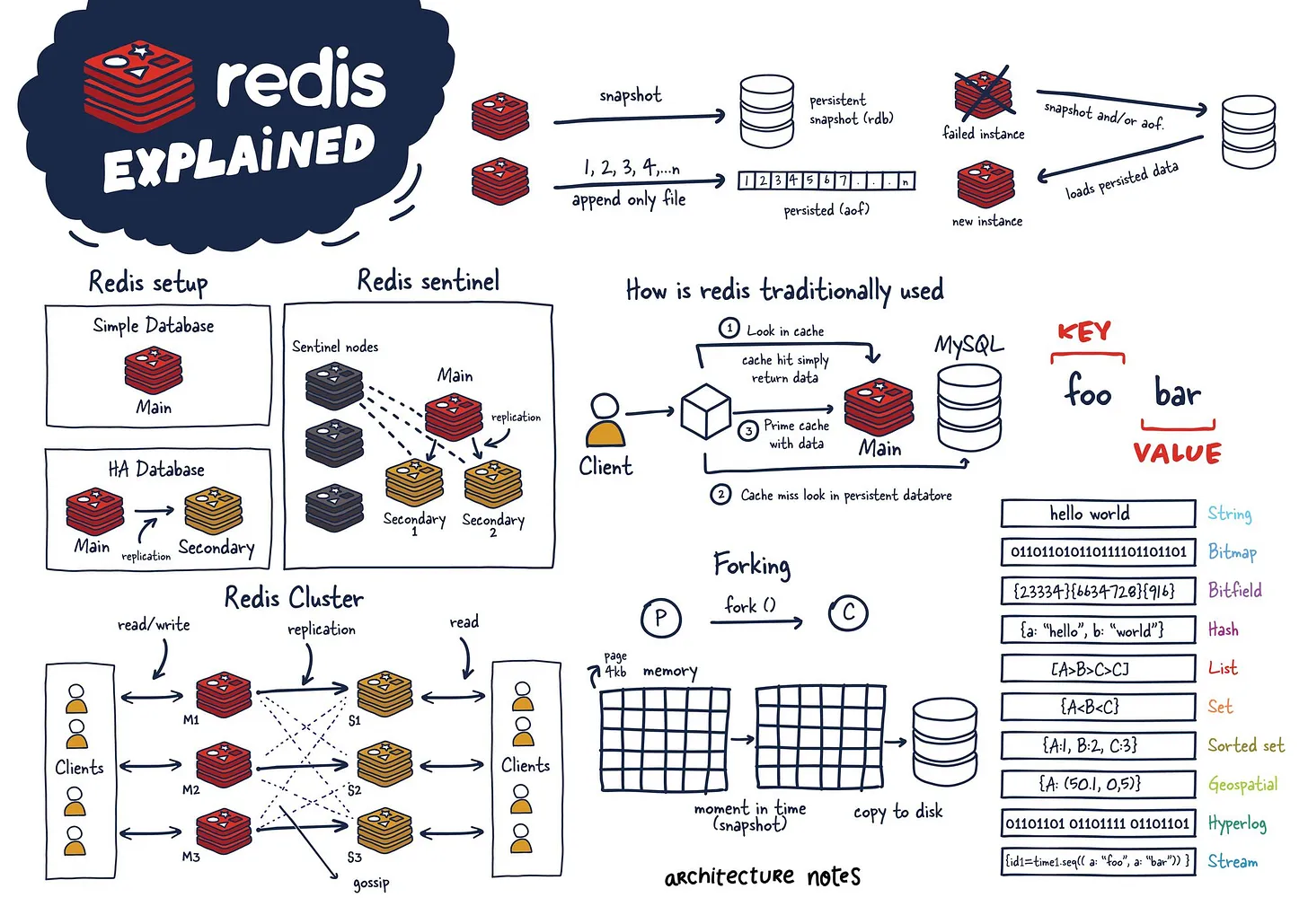
redis
architecture
- single-node
- master-slave: 1 master node + >= 2 slave nodes
- sentinel: monitoring, notification, automatic failover
- cluster: distributed caching -> improve HA
why fast?
- in-memory storage
- optimized data structure
- single-thread model: simplifies code base, eliminates threading overhead and race condition
- asynchronous and non blocking I/O