Virtual private cloud
- VPC is virtual version of physical network
- VPCs and their routes, firewall rules are global resources, are not associated with any region or zone
- Firewall supports ingress (inbound) and egress (outbound) rules for TCP, UDP, ICMP (
pingcommand), … protocols - VPC has one or more subnets, subnet is regional resource, has specific IPv4/v6 range wiki
- VPC can be shared between projects (shared VPC)
- shared VPC is defined in host project and made available in shared projects
- VPC can connect with each other with virtual private network (VPN), cloud interconnect, network peering using internal ip addresses. VPC can connect to Google’s service by using private service access
Subnet
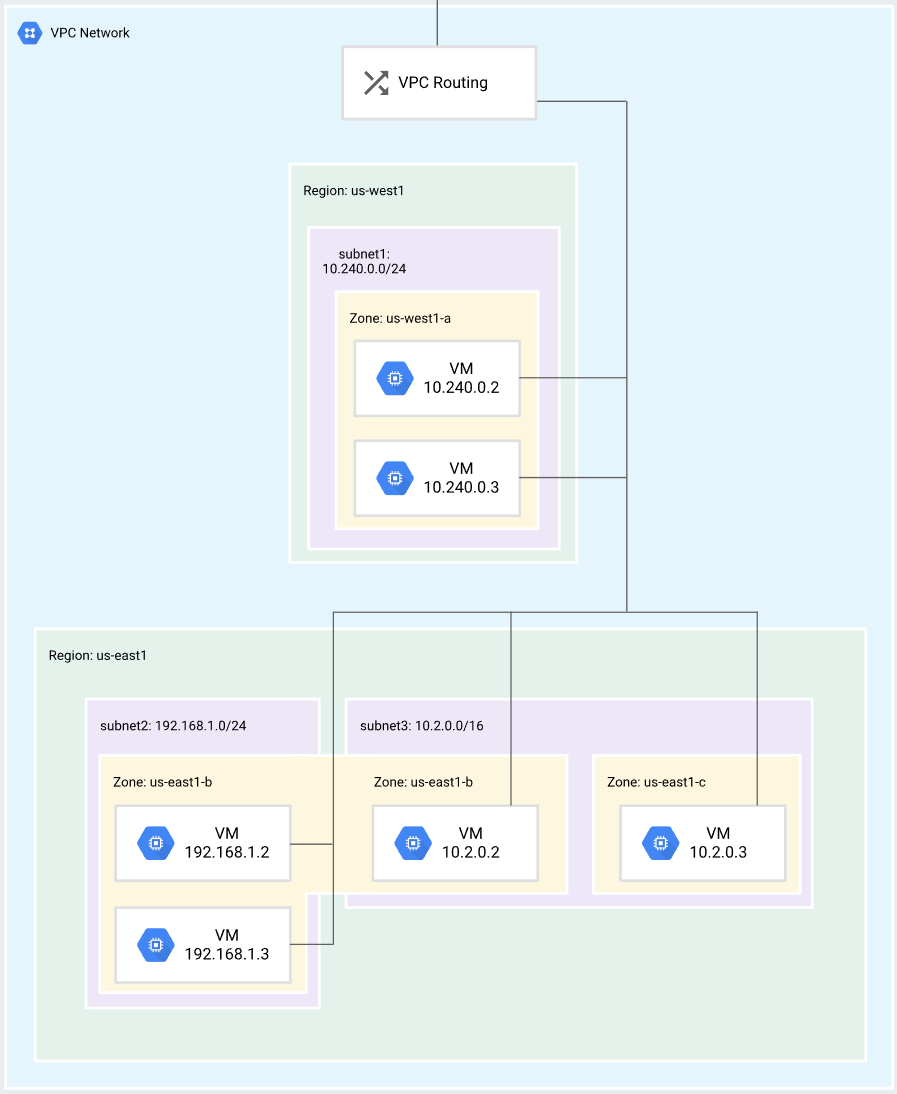
- subnets are regional resources (in one or more zones), have ip addresses associated with them
- public subnets can access internet directly, private subnets require NAT
- 3 main types of subnet:
- regular
- for VM, GKE, backend services …
- proxy-only:
- for regional load balancers (connection from proxy-only subnet to LB backend services)
- provide a pool of ip address (subnet
/26or more) that are reserved exclusively for envoy-based load balancers GCP doc for proxy network load balancer (regional only), terminates client’s request and send to target backend using forwarding rules
- private-nat: for private-to-private translations across Google Cloud networks
- regular
Network peering
- Network peering connects only 2 VPCs so each network can connect with each other using internal ip addresses, their subnets’ ip range cannot overlap
- Transitive peering is not supported. N1 is peered with N2, N3, but N2 and N3 cannot communicate (are not directly connected)
- Some GCP services use network peering as default mode to connect VPC and service’s Google-managed VPC -> use private service access to support transitive connection
- Support between VPCs:
- route exchanges
- internal LB (both application and network LB)
- Not support:
- network security (firewall rules, policies)
- DNS
Private service access
GCP doc GCP doc for private access options for services terraform
- Private service access allow to use internal IP addresses of GCP services by private connections
- Private service access uses network peering for connection
- Must allocate internal ip address (subnet
/16to/24) to VPC (allow transitive connection) - To support on-premises or other cloud connectivity through VPN or Cloud interconnect, allocated ip address for private service address must be advertised by VPN router in
bgpblock terraform
Virtual private network
- VPN connects peered network to VPC, support encryption by gateways
- too expensive (not recommended)
- 2 types of VPN
- Classic VPN:
- supports 1 interface, 1 external ip address, static routing
- HA VPN:
GCP doc
- provide service availability SLA
- uses 2 interfaces (1 external ip address for each), dynamic routing (BGP - border gateway (routing) protocol) (flexible and scalable network), and multiple tunnels
- uses cloud-interconnect (physical connection) for encryption
- to use HA-VPN encryption, deploy tunnels over VLAN attachments GCP doc (requires cloud-interconnect)
- HA-VPN gateway to peer devices:
- 2 peer VPN devices:
TWO_IPS_REDUNDANCY- redundancy and failover
- 2 tunnels, one for each peer device
- 1 peer VPN device with 2 ip addresses:
TWO_IPS_REDUNDANCY- 2 tunnels, one for each ip address of peer device
- 1 peer VPN device with 1 ip address:
SINGLE_IP_INTERNALLY_REDUNDANT- 2 tunnels, both for ip address of peer device
- AWS HA-VPN:
FOUR_IPS_REDUNDANCY- 2 gateway interfaces
- 2 peer VPN endpoints (2 customer gateways)
- 4 tunnels, 2 tunnels from 1 VPN gateway interface to peer endpoint (with 2 ip addresses)
- Create HA-VPN between GCP and AWS step by step tech.deriv’s blog
- 2 peer VPN devices:
- Classic VPN:
Google kubernetes engine k8s
Cloud load balancing
- distributes user traffic across multiple services, instances, … (load balancing backend services) -> reduce risk
- connections are split to 2 paths: client -> LB and LB -> backend services
- supports:
- single IP address
- software-defined
- seamless autoscaling
- L4/L7, internal (inside VPC)/external, regional/global load balancing
- TLS termination
- cloud CDN, cloud armor, …
- three-tier of web services:
- web tier: client (web) -> web frontend (external application LB)
- application tier: web frontend -> middlewares (internal application LB)
- database tier: middlewares -> database (passthrough network LB)
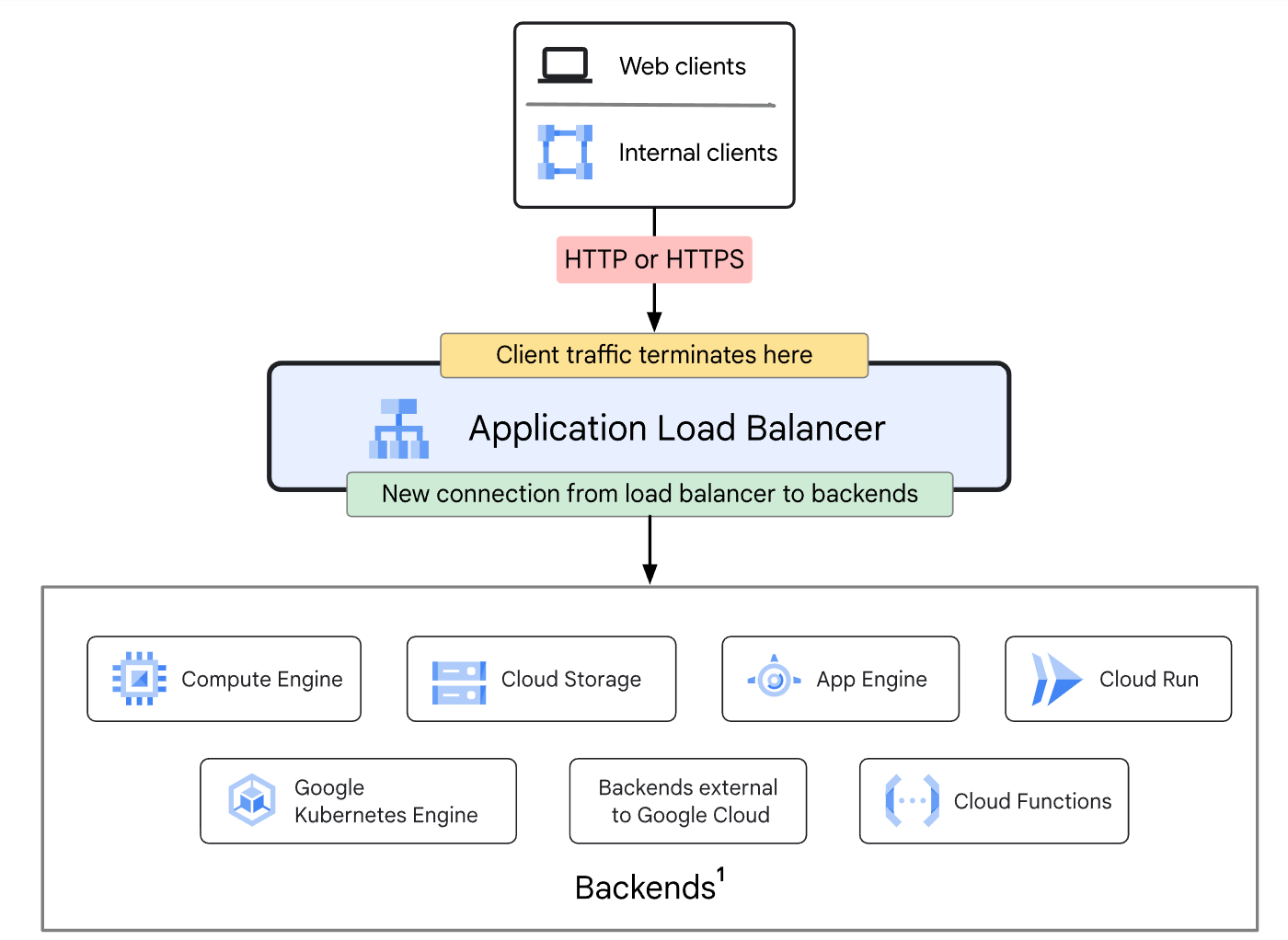
- application (L7 - application layer) load balancer
- for HTTP/HTTPs
- LB terminates user traffic (and SSL), and creates new connections to backend services
- support GKE gateway, ingress, or NEG
- network (L4 - transport layer) load balancer
- for TCP, UDP, ICMP, …
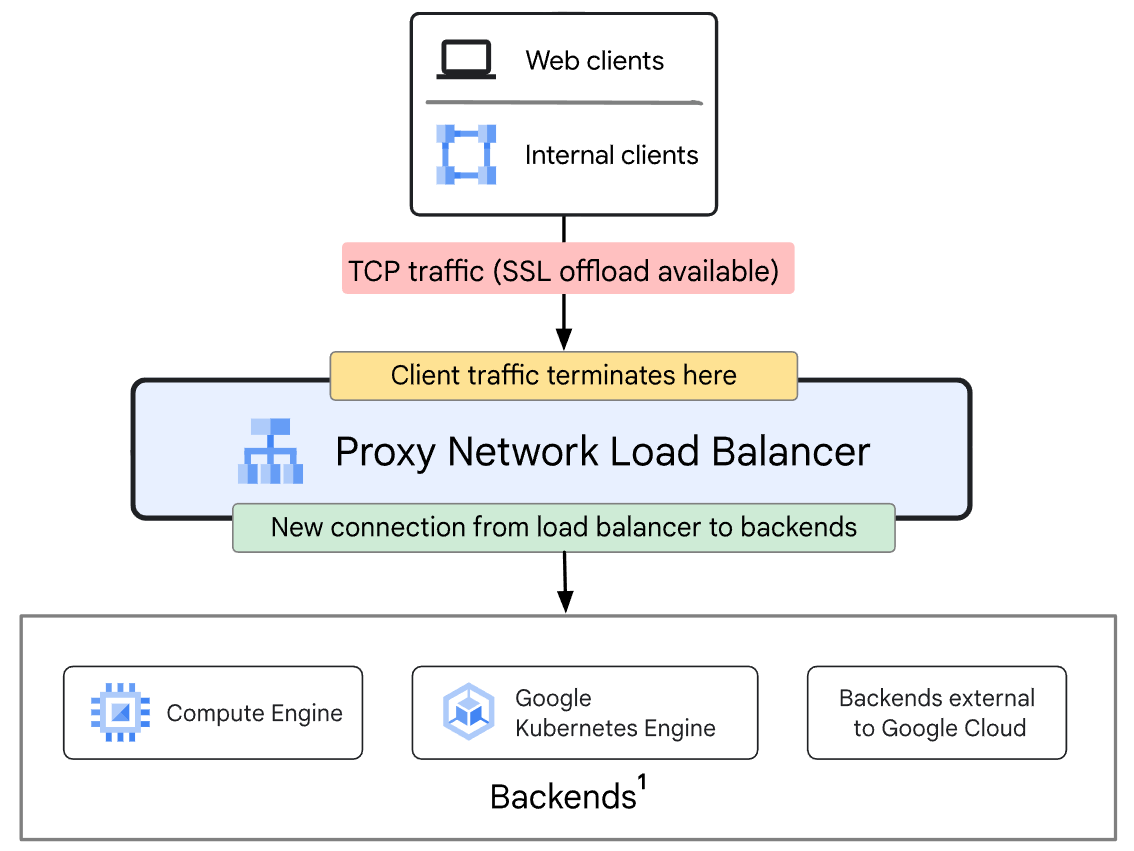
- (reversed) proxy network LB
- LB terminates user traffic, and creates new connections to backend services
- LB terminates user traffic, and creates new connections to backend services
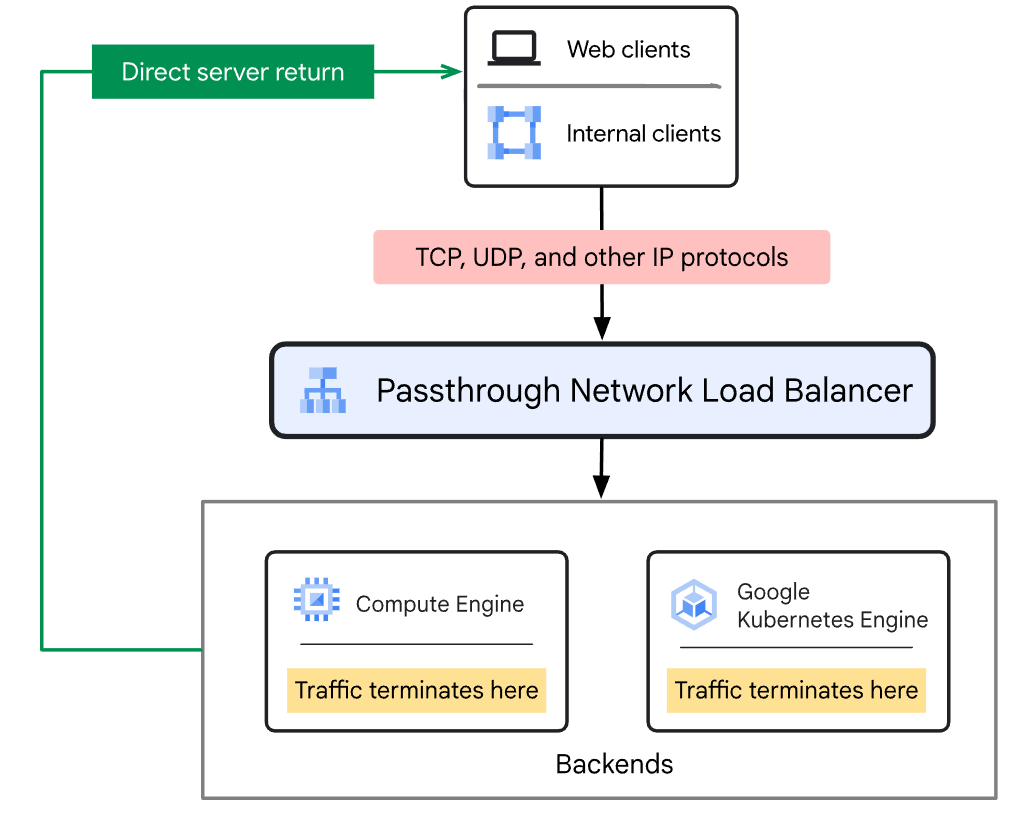
- passthrough network LB
- keep packets’ source, destination ip addresses, protocol, …
- connections are terminated at backend services, and responses come directly to clients, not back through LB
- proxy-only subnet for LB (regional internal/external load balancers)
- requires reserved exclusively ip addresses for LB
- client -> LB -> proxies (use internal ip addresses) -> backend services
- container-native load balancer through ingress
- send requests from load balancer to services directly (through network endpoint groups - NEG), without using instances group and IP tables -> faster (without extra hops) GCP - Network endpoint group
Cloud DNS
- domain name system service publishes domain to global DNS
- distributed database stores ip addresses, other data and look up by name
- support DNSSEC for verifying origin of DNS data and validating data was modified or not
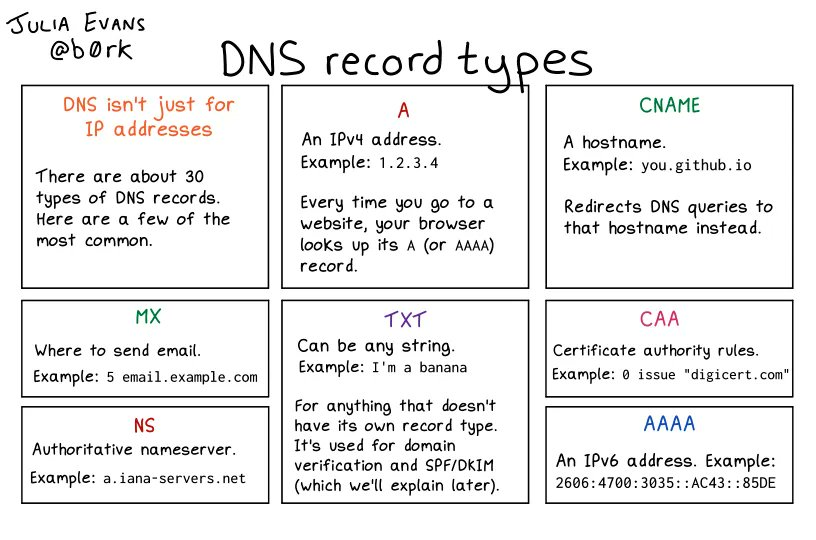
- some DNS’ record types