-
system of records - source of truth
- holds authoritative version of data, incoming data is written here first
-
derived data
- holds transformed/processed data from other systems
- derived data is redundant - denormalized, but is essential for read queries (better performance)
-
system types
- services (online system)
- primary measure: response time + availability
- batch processing (offline system)
- primary measure: throughput (number of jobs?)
- stream processing (half online system)
- operates on events shortly after they happen -> lower latency than batch processing system
- services (online system)
batch processing
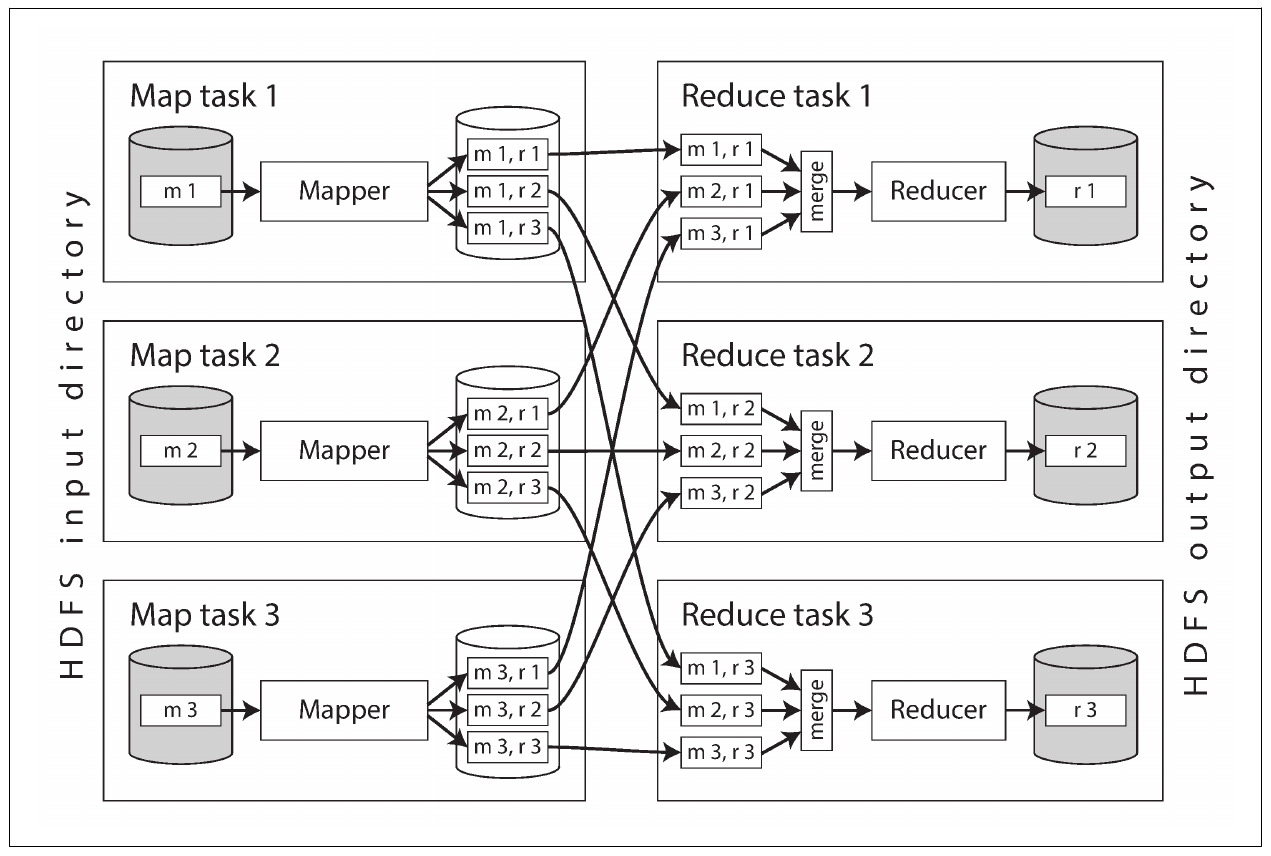
mapreduce
- mapper:
- extract key/value tuples from each record, each record can handle independently
- reducer:
- aggregate each key/value tuples from mapper into single value
- distributed mapreduce
- reducer-side joins and grouping
- map-side joins
- need some assumptions about data
stream processing
transmitting event streams
- event:
- small, self-contained, immutable object containing the details of something
- events are grouped into topic/stream
message systems
-
-> the producers send messages faster than the consumers can process them?
-
-> if nodes crash/go offline, are any messages lost?
-
direct messaging
- use direct network communication between producers and consumers - brokerless messaging
-
message brokers - message queue
- can keep message permanently
- can use unbounded message queue for slow consumers
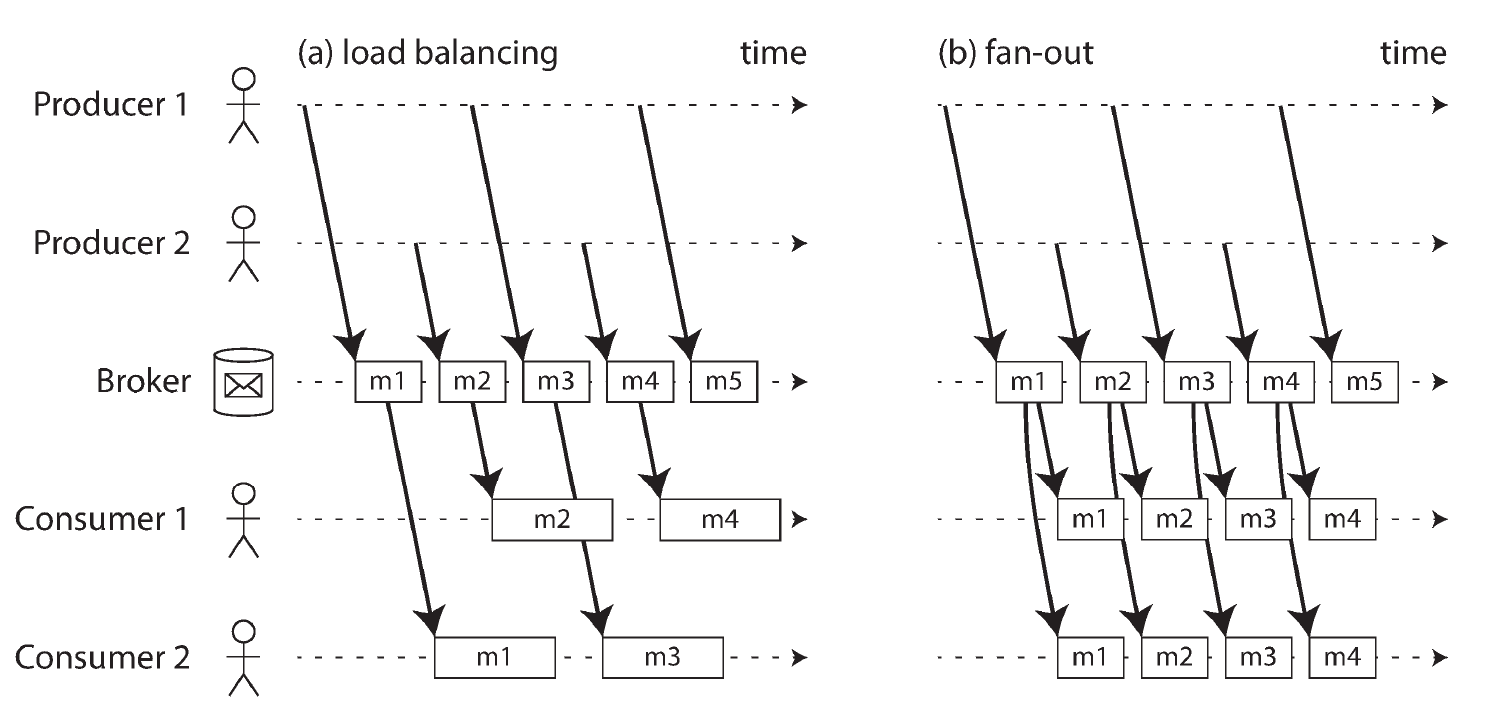
- multiple consumers
- load balancing: assign one consumer for each message
- fan-out: broadcast a message to all consumers, run independently
- acknowledgements and redelivery
- consumer must tell to message broker that message processing is successful (ack), if not (failed response, timeout, …) the message is sent to another consumer (redelivery)
- message can be reordered (message is redelivered) when using load balancing
- using logs (append-only sequence of records) for message storage
- a producer sends a message by appending it to log, a consumer reads log sequentially
- log-based approach supports fan-out messaging, multiple consumers can read independently (not delete message from queue)
- change data capture (CDC)
- observe all data changes written to DB, extract them to apply to derived data systems
- database trigger can be used to implement CDC
event sourcing
- store all changes as log of change events, built on immutable events that are written to an event log
- commands/events
- command: user’s request
- event: command -> event (is fact, cannot be rejected by consumer)
- immutable events