use buffering and append-only storage to achieve sequential writes
immutable structures needn’t locate data on disk to update, duplicate contents are allowed and conflicts are resolved during read time -> writes are commoner than reads
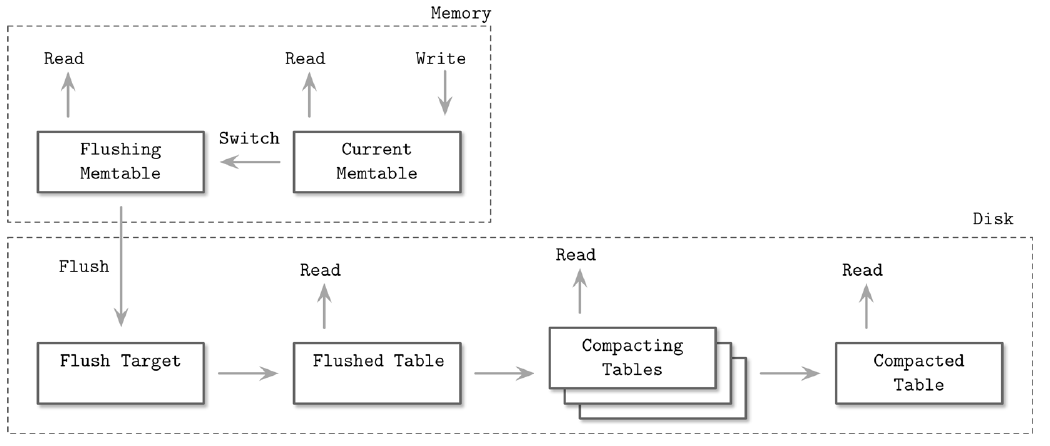
2 components lsm tree
mutable memory-resident (memtable)
it buffers data records and serves as a target for read/write operations
its data is flushed on disk when its size grows up to a threshold
immutable disk-resident
it is built by flushing data from memtable -> read-only
flushing process
all new writes go to new memtable when flushing starts
both disk/memory-resident data must be accessible for reads during flushing
unmerged disk/memory-resident must be discarded after flushing
multi components lsm tree
lsm updates
use tombstone marker to mark deleted records (because SS-tables are immutable), and it is removed during compaction
lsm lookups
during lookup, multiple contents are merged and reconciled before returning to client
merge-iteration
merge data from multiple sources using iterators and priority-queue (output is sorted)
reconciliation/conflict resolution
compaction
it reads and merges contents from some tables, replaces old tables with new merged table
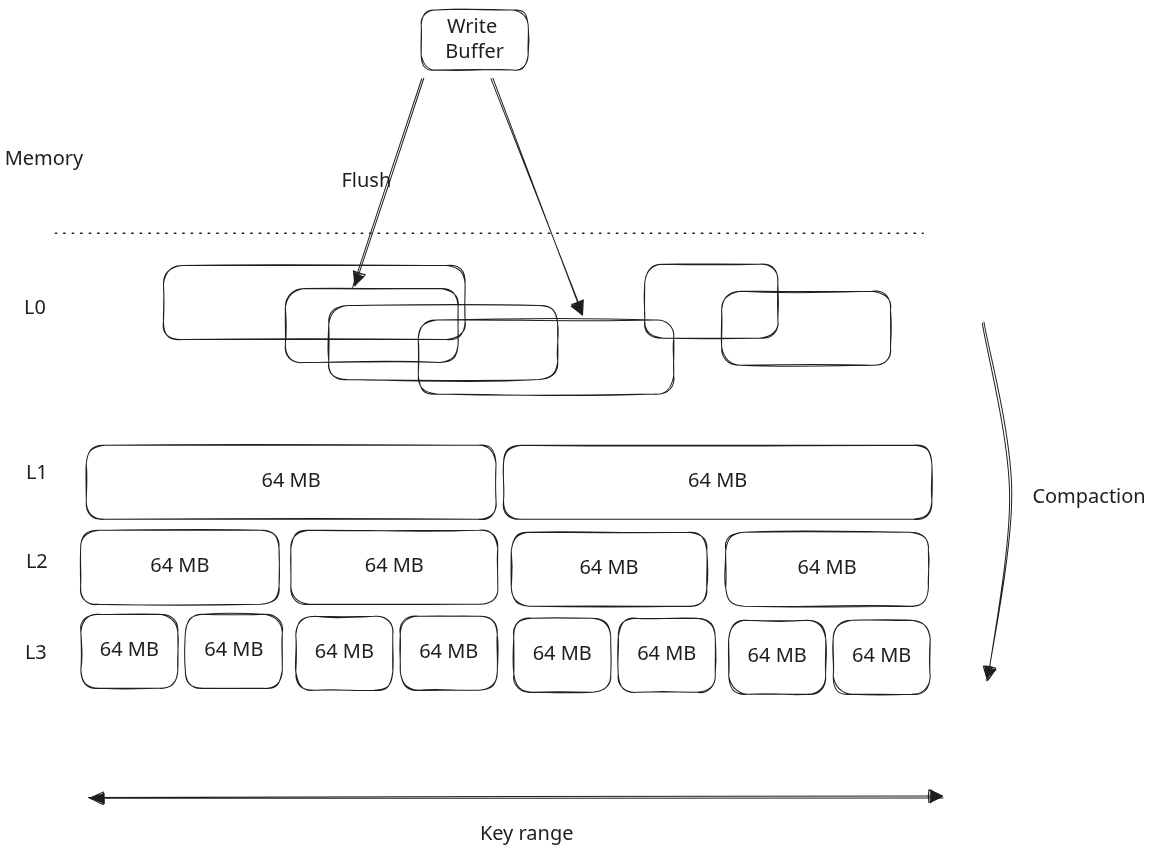
leveled compaction
it separates disk-resident tables into levels
level-0 tables are created by flushing memtable contents, they are merged to level-1 tables and so on
key ranges for tables on level 1 and higher level do not overlap (in same level)
when search a value: search on write buffer, multiple segments on level 0 (they can overlap), 1 segment on each next level
size-tiered compaction
group tables by size instead of level
one of problems is table starvation (compacted tables are small enough after compaction)
sorted string tables (SS-table)
data records in SS-tables are sorted
bloom filter
is a space-efficient probabilistic data structure to test whether an element is a member of set or not. it can produce false-positive/false-negative result
it uses a large bit array and multiple hash functions. if an element is a member of set, all of hash functions’ bit are set
probability of false positives are managed by size of bit set and number of hash functions
skip list (singly-linked list)
it is a data structure for keeping sorted data in memory
it has better concurrency than b-tree in memory, b-tree is cache-friendly
it use probabilistic balancing when a new node is inserted (how many levels/express lanes?), b-tree uses deterministic balancing
its structure is simpler (resembling a singly-linked list)
lowest level: contains all sorted items
higher levels (express lanes): each higher level skips over items
concurrency in LSM
main challenges are switching table views and log synchronization
synchronization flow
memtable switch: all writes go to new memtable (primary), the old one is available for reads
flush finalization: replaces old memtable with a flushed disk-resident table in table view
write-ahead log truncation: discards log segments that associate with a flushed memtable (after flushing is complete)