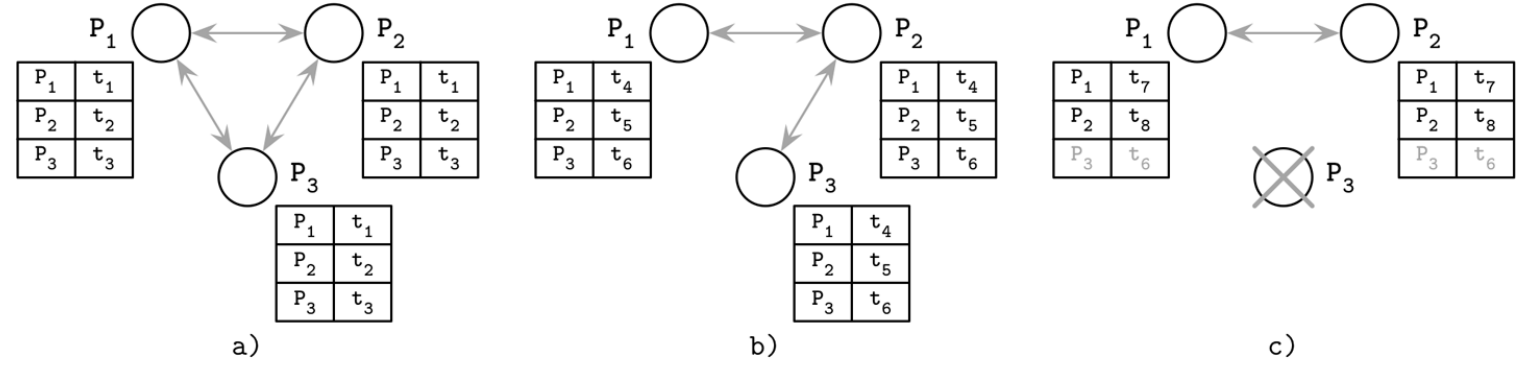
collect and distribute states of neighboring processes
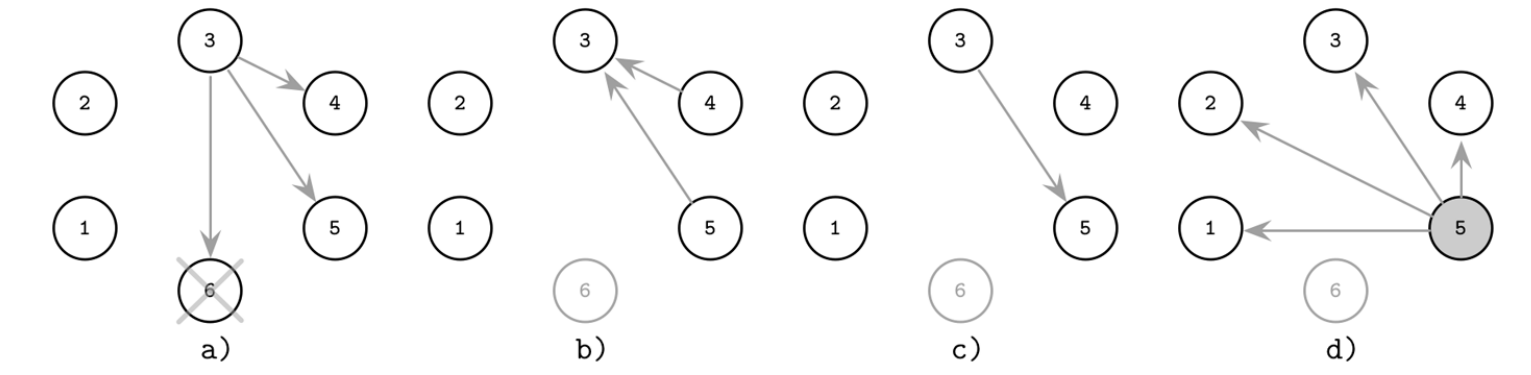
leader election
bully algorithm
use participants’ rank to elect new leader (with highest rank)
if nodes are splitted into 2 or many subsets -> split brain
next-in-line failover
each elected leader provides list of failover nodes -> select highest rank node from provided list to elect as new leader
candidate/ordinary
invitation algorithm
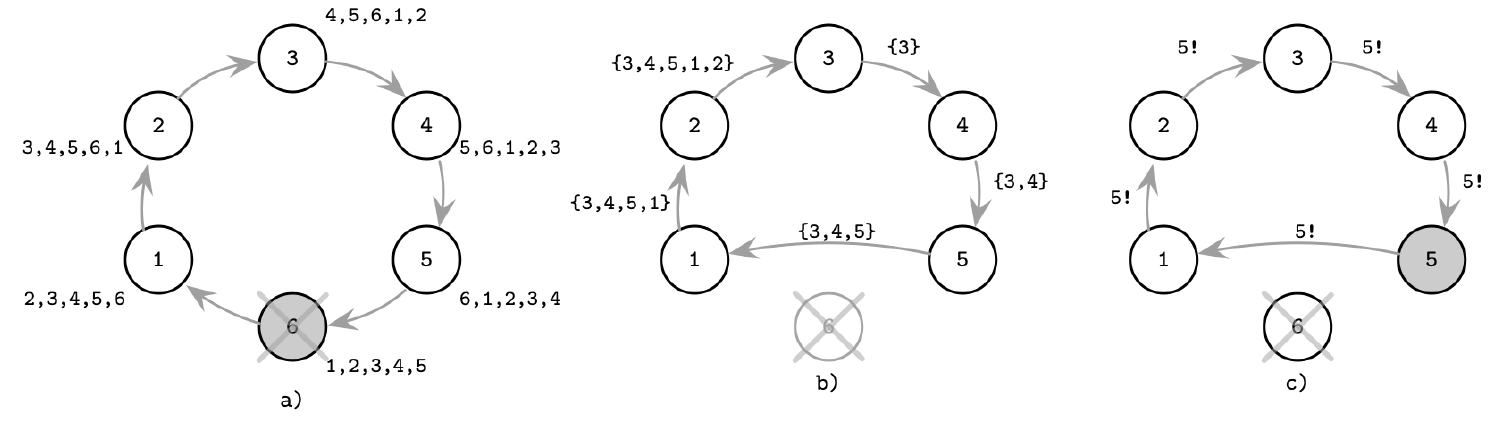
ring algorithm
all nodes form a ring, the election message is forwarded across the ring
the algorithm proceeds by fully traversing the ring -> select highest rank
replication and consistency
fault tolerance: system can continue working correctly in the presence of failures of its components
ordering
consistency models
strict consistency
complete replication transparency, any write by any process is instantly available for all subsequent reads by any process -> theoretical model, impossible to implement
linearizability
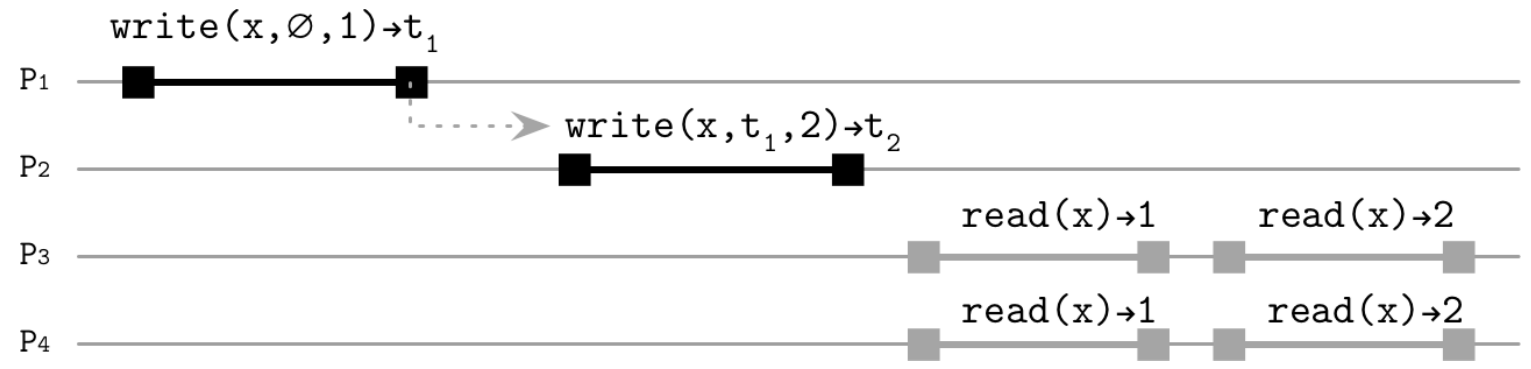
the strongest single-object, single-operation consistency model.
write become available to all reads at some point in time, no client can observe state transitions, side effects of partial/incomplete operations
defines total order of the events. this order is consistent, every read of shared value return latest value
cost:
synchronization instructions are expensive, slow and involve cross-node CPU and cache validations -> avoid linearizability
sequential consistency
allow ordering operations as if they were executed in some sequential order
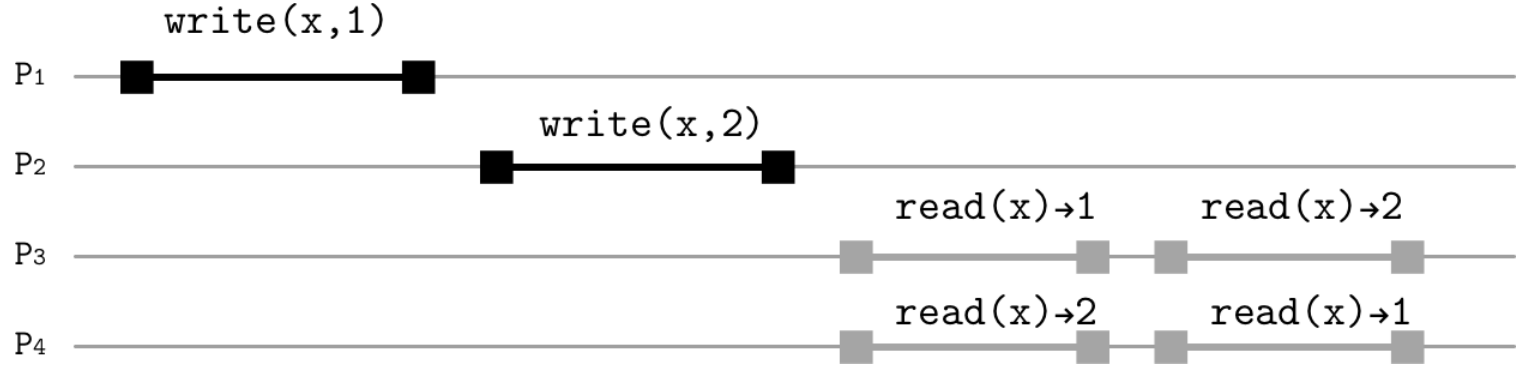
operations can be ordered in different ways but all processes observe the operations in the same order
linearizability requires operations to be globally ordered (linearizability requires order of each process and global order to be consistent)
main difference between linearizability and sequential consistency = absence of globally enforced time bounds
linearizability requires when write operation W completes -> all readers should be able to see newest values
in sequential consistency, results can become visible after its completion
causal consistency
all processes have to see causally related operations in the same order. concurrent writes without causal relationship can be observed in a different order by processes
|
causally consistent system guarantees that the view of database is consistent with its own actions
causal consistency can be implemented using logical clocks and sending context metadata with every message
VECTOR CLOCK
causal order allows the system to reconstruct the sequence of events even if they are out of order
vector clock establishes a partial order between events, detects and resolves divergence event chains
vector clock allows replicas to serve state reads and accepts conflict writes -> create independent chains of events
session models
how each client observes the state of the system while issuing reads and writes
read-own-writes consistency model is every write issued by client is visible to it
monotonic reads model is if read(x)=V then following read(x) reads return V or newer values
monotonic writes model is client session order is visible to other sessions (same order). if not, data loss occurs
writes-follow-reads (session causality) is writes are ordered after writes that are observed by previous reads. if write(x,v2) is after read(x)=v1 then write(x,v2) is after write(x,v1)
eventual consistency
under eventual consistency (no hard time bound), updates propagate asynchronously. if there is a conflict, values from diverged replicas are reconciled using a conflict resolution
tunable consistency
is eventual consistency with tunable variables where R+W > N
N: number of nodes that store data
W: number of nodes that have to acknowledge its write is success
R: number of nodes that have to respond its read is success
QUORUMS
a consistency level that consists of floor(N/2)+1 is called quorum - a majority of nodes
with at least 1 node in any majority, any quorum read will observe the recentest completed quorum write
witness replicas
is replicas without data persistence
handle node failure and maintain availability
witness replicas serve as tie-breakers (equal counting) in voting (for consensus) to form a quorum -> help system decide if a write should happen
strong eventual consistency / conflict-free replicated data types (CRDTs)
release some consistency requirements by allowing operations to preserve additional state that allows the diverged states to be reconciled
anti-entropy (repair inconsistencies) and dissemination (spread new updates)
read repair
the coordinator node sends requests to replicas, and compares their responses. the coordinator node detects inconsistencies and sends updates back to replicas that missed updates
hinted handoff
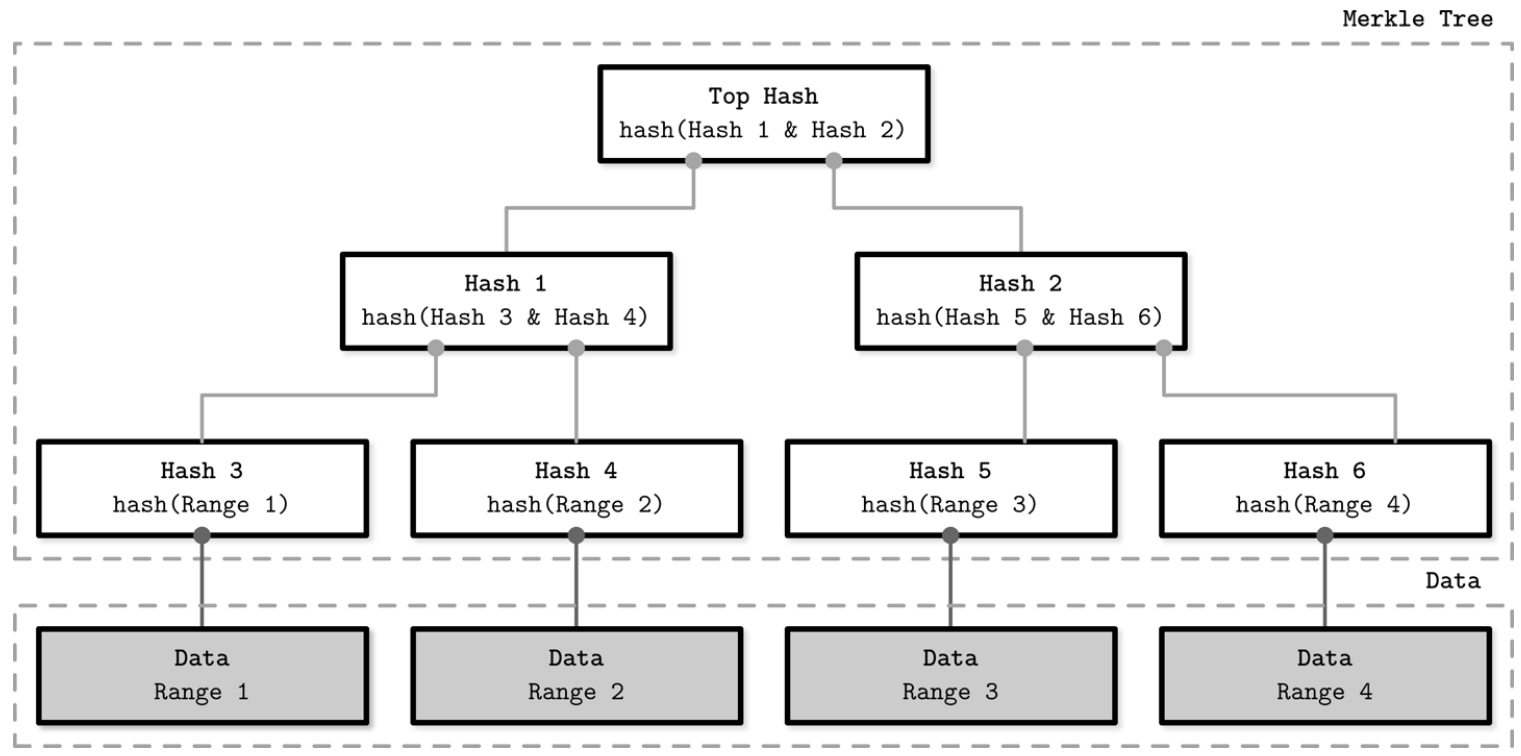
merkle tree
a mechanism finds and repairs data that is not actively queried, reduces cost of reconciliation
is a tree of hashed representation of local data
finding consistencies between 2 replicas -> compare hashes from their markle trees
gossip
gossip protocols are probabilistic communication procedures to disseminate information from one process to the rest of cluster by cooperative propagation
 |
|