- balanced search tree with high fanout (improve locality of neighboring keys) and low height (reduce number of seeks during traversal)
- keys in b-tree node are stored in order
structure
- page header
- magic number
- sibling links (neighbors)
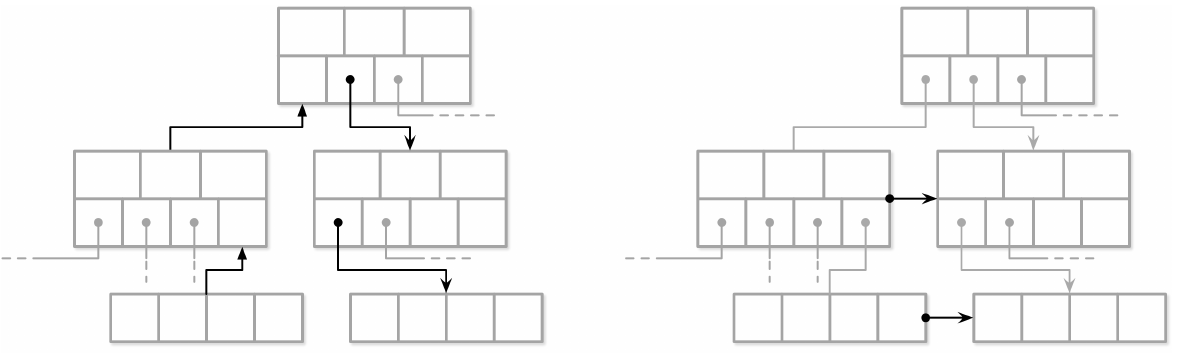
- rightmost pointer (k keys -> k+1 children)
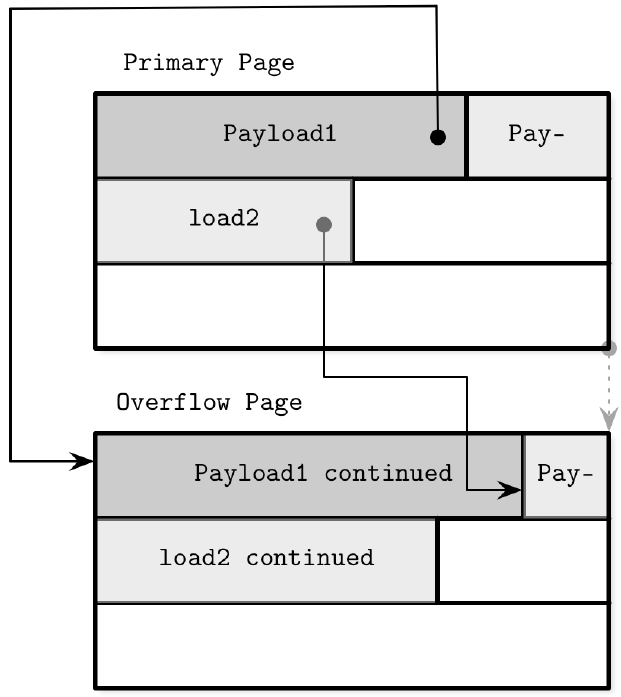
- overflow pages
- b-tree node keeps a specific number of items -> variable-size node = multiple linked pages (overflow pages)
b-tree variants
copy on write
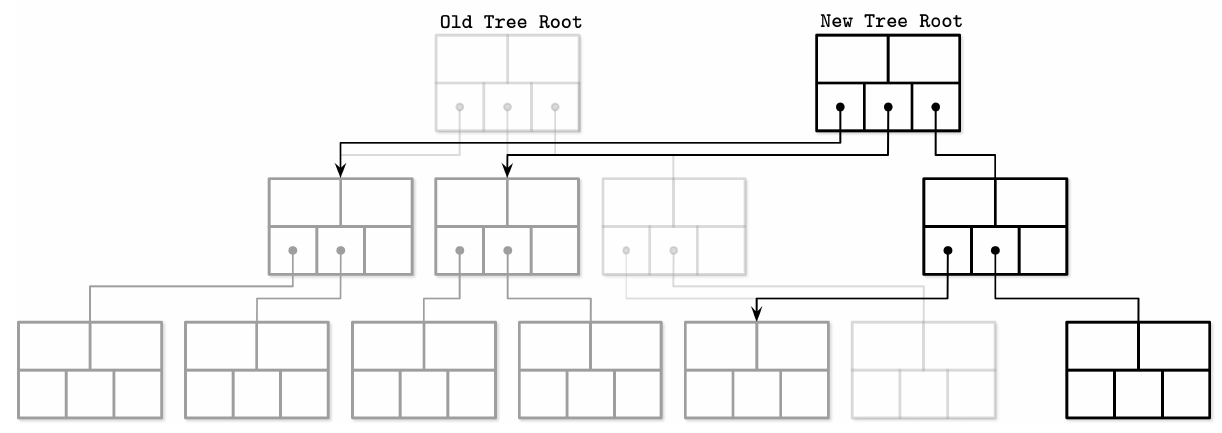
- use copy-on-write instead of latching for data integrity
- advantages
- readers require no synchronization, writer doesn’t block readers (written pages are immutable -> no latching)
- disadvantages
- requires more storage and processing time, but b-tree is shallow -> it is acceptable
lazy b-tree
- lightweight, concurrency, update-friendly in-memory structures to buffer updates, and propagate later
- reduce random IO by batching updates
WiredTiger/MongoDB
- buffering updates to individual nodes
- materialize node in memory while it is paged until it is flushed
- update buffers are accessed during reads (merged with original data on disk)
- page updates and structural modifications run on background -> reads/writes needn’t wait
lazy-adaptive tree
- buffering updates to subtree, and propagate changes to lower levels (to leaf nodes) when buffer becomes full
FD-tree
- minimize random writes by converting them to sequential merges
fractional cascading
- to locate item in multiple sorted arrays. complexity is O(k+logn) instead of O(klogn) (use binary search on each array)
BW-tree
- batch updates to nods by append-only storage, use in-memory data structure that allow installing pointers between nodes -> make tree latch-free
- high concurrency, no cache validation
cache-oblivious b-tree